
What Questions Should You Ask During a Site Visit? A …
Fire Safety Norms for Residential Buildings: A Complete Guide
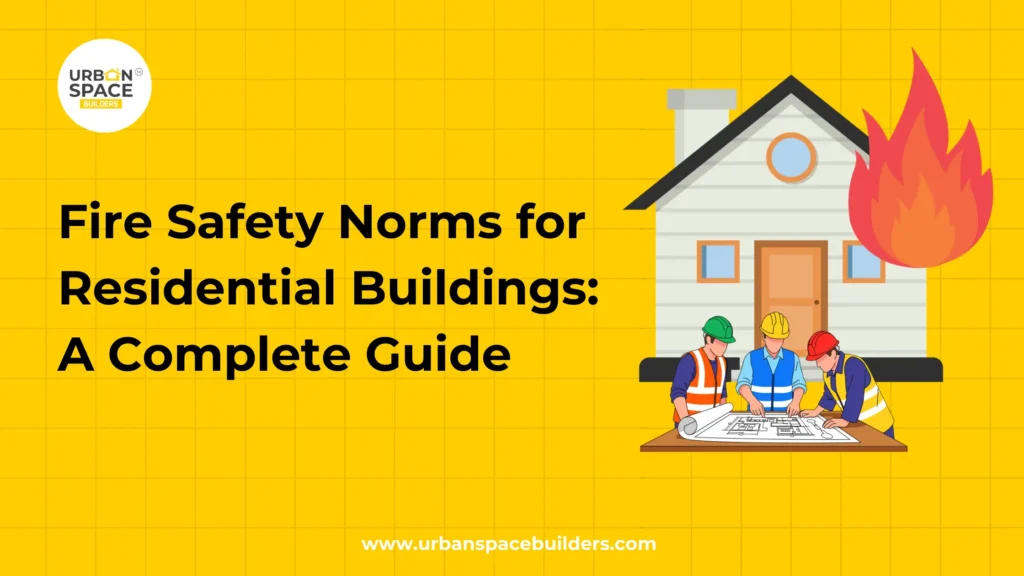
Fire can spread through a home within minutes, leaving residents with very little time to react. Proper planning, safe electrical systems, clear exits and working fire equipment can reduce this risk. Understanding the fire safety rules for residential buildings is therefore essential for homeowners, apartment residents, builders and housing associations.
Urban Space Builders follows safety-focused planning while developing residential projects in Chennai. This guide explains the important fire safety measures that every residential building should consider.
What Are Fire Safety Norms for Residential Buildings?
Fire safety norms are planning, construction and maintenance requirements designed to prevent fires, control their spread and help residents evacuate safely.
In India, the National Building Code of India (NBC) provides guidance on building fire and life safety. Part 4 of NBC 2016 covers protection from fire, smoke, fumes and panic. It addresses areas such as exits, fire-resistant construction, alarm systems and firefighting equipment. Local development rules and fire-authority requirements also apply. The Bureau of Indian Standards’ NBC guide provides an overview of these provisions.
The applicable rules can change depending on:
- Building height and number of floors
- Total built-up area
- Number of residents
- Apartment, villa or individual-house classification
- Basement and parking arrangements
- Road access for emergency vehicles
- Local planning and fire-department conditions
A fire-safety professional should review the approved plan because the same requirements may not apply to every home.
Why Is Residential Building Fire Safety Important?
Residential fires may result from electrical faults, overloaded sockets, cooking accidents, LPG leaks, candles or unsafe storage of flammable products. In apartment buildings, fire and smoke can also spread through corridors, service shafts and staircases.
Effective residential building fire safety helps:
- Protect residents, children and senior citizens
- Provide enough time for safe evacuation
- Reduce the spread of flames and smoke
- Improve access for firefighters
- Protect neighbouring homes
- Reduce property damage
- Support building approval and fire-safety compliance
- Improve long-term building safety
Fire protection should begin during architectural and structural planning. Adding major systems after construction can be difficult and expensive.
What Fire Safety Measures Should Residential Buildings Have?
1. Safe and Accessible Emergency Exits
Every resident should be able to reach a safe exit without confusion. Corridors, staircases and exit doors must remain clear. Shoes, bicycles, furniture, waste and storage boxes should never block an evacuation route.
Larger residential buildings may require separate fire escape staircases or additional exits based on the approved plan. Exit doors should be easy to open during an emergency.
2. Smoke Detectors and Fire Alarm Systems
Smoke detectors provide an early warning before residents see flames. They are especially useful in bedrooms, living areas, corridors and common spaces.
Apartment buildings may require a connected fire detection and alarm system. The alarm should be audible in all occupied areas and easy to activate. Batteries, detectors and control panels must be tested regularly.
3. Fire Extinguishers
Suitable fire extinguishers should be installed in visible and accessible locations. The required type depends on the possible fire source.
For example, equipment used for an ordinary material fire may not be suitable for an electrical or cooking-oil fire. Residents and maintenance staff should receive basic training. They should attempt to use an extinguisher only when the fire is small and there is a safe escape route.
4. Sprinklers, Hose Reels and Hydrant Systems
Depending on the building category, fire safety requirements for residential buildings may include:
- Automatic sprinkler systems
- Fire hose reels
- Wet risers
- Fire hydrants
- Dedicated fire-water storage
- Fire pumps
These systems help control a fire and support firefighting operations. They should be designed by qualified professionals and maintained according to the applicable approval conditions.
5. Fire-Resistant Construction
Fire-rated doors, walls and other approved materials can slow the movement of flames and smoke. Doors provided as part of the building’s fire-safety design should never be permanently held open.
Openings around electrical cables, plumbing lines and service shafts must be properly sealed. Poorly protected service openings can allow smoke to move quickly between floors.
6. Emergency Lighting and Exit Signage
Normal power may fail during a fire. Emergency lights help residents identify stairs and exits during darkness or heavy smoke. Clear exit signs are especially important in apartment corridors, parking areas, basements and staircases.
Emergency lighting should have backup power and be checked during scheduled inspections.
What Are the Fire Safety Rules for High-Rise Buildings?
Fire safety rules for high-rise buildings are usually more detailed because evacuation and firefighting become harder as building height increases.
Depending on the applicable rules and approved design, high-rise apartments may need:
- Protected escape staircases
- Automatic sprinklers
- Wet risers and hydrants
- Fire lifts
- Fire-control rooms
- Refuge areas
- Smoke-control systems
- Emergency communication systems
- Backup power for essential fire equipment
- Access routes for fire-service vehicles
Residents should not use ordinary lifts during a fire unless the building’s emergency instructions specifically direct them to an approved fire lift. Refuge areas must also remain accessible and should never be converted into storage or another private use.
How Can Homeowners Improve Electrical and LPG Safety?
Electrical faults are a major household risk. Homeowners should use correctly rated wires, circuit breakers and protective devices. All electrical work should be completed by trained professionals.
Avoid the following unsafe practices:
- Connecting many appliances to one socket
- Using damaged plugs or loose wiring
- Running electrical cables under carpets
- Making temporary joints without proper protection
- Charging devices on beds or other heat-trapping surfaces
- Ignoring burning smells, sparks or repeated power trips
LPG cylinders should be kept upright in a ventilated area. Regularly inspect the regulator, hose and connections. If you smell gas, do not operate switches or create a flame. Turn off the cylinder if it is safe, open doors and windows, leave the area and contact the authorised service provider.
What Should an Apartment Evacuation Plan Include?
Every apartment community needs an easy-to-follow emergency evacuation plan.
The plan should identify:
- The nearest safe exit from each area
- An alternative exit route
- A safe outdoor assembly point
- A method to assist children, seniors and people with disabilities
- Emergency contact details
- Responsibilities of security and maintenance staff
- A method for checking whether everyone has evacuated
Housing societies and resident welfare associations should conduct periodic fire drills. Residents must use staircases, stay calm and avoid returning to collect personal belongings.
Common Fire Safety Mistakes to Avoid
A building may have fire equipment and still remain unsafe if it is poorly maintained. Common mistakes include:
- Blocking staircases and exit routes
- Locking emergency exits
- Allowing extinguisher service dates to expire
- Switching off alarm systems because of false alerts
- Using basements for unauthorised storage
- Parking vehicles in fire-access areas
- Altering the approved building layout
- Ignoring electrical inspection and maintenance
- Failing to conduct evacuation drills
- Assuming that fire safety is only the builder’s responsibility
Building management and residents share responsibility for keeping safety systems usable.
Also Check: Get Your Dream Construction Budget Right with Our Calculator
Residential Fire Safety Checklist
Homeowners and apartment associations can use this basic checklist:
- Smoke detectors are installed and tested
- Fire alarms are working properly
- Fire extinguishers are accessible and serviced
- Staircases and exits are free from obstruction
- Exit signs and emergency lights are operational
- Electrical systems are periodically inspected
- LPG connections are checked for damage
- Fire doors close correctly
- Hydrants, pumps and sprinklers are maintained
- Emergency contact numbers are displayed
- Residents understand the evacuation plan
- Fire drills are conducted periodically
- Required approvals and safety records are available
Fire NOC and Compliance in Chennai
The need for a Fire NOC for residential buildings depends on the building’s classification and applicable regulations. The Tamil Nadu Fire and Rescue Services conducts inspections and issues fire-safety NOCs or licences where required. Its official website provides current department information and fire-safety resources.
Before beginning a residential project in Chennai, consult the architect, structural engineer, planning authority and fire-safety professional. The final requirements should be confirmed based on the latest rules, approved building plan and site conditions.
Conclusion
Fire safety is not limited to installing extinguishers after construction. It starts with proper planning, safe materials, accessible exits, reliable electrical work and effective site supervision. Regular inspection and resident awareness are equally important after the building is occupied.
Urban Space Builders considers practical safety, engineering coordination and construction quality while planning residential homes in Chennai. If you are planning an individual house, villa, duplex or apartment project, speak with our team for residential construction, architectural design, structural planning and site-supervision support.
Also Check: Useful Tips for Designing a Comfortable House
Recent Posts
What Questions Should You Ask During a Site Visit? A …
Let's Build Your Dream Home Now!
What Questions Should You Ask During a Site Visit? A construction site visit gives you much more information than a brochure, quotation …
What Questions Should You Ask During a Site Visit? A construction site visit gives you much more information than a brochure, quotation …

What Questions Should You Ask During a Site Visit? A construction site visit gives you much more information than a brochure, quotation …
How Staircase Design Affects Space and Comfort in a Home A staircase may occupy only one part of a house, but its …
Frequently Asked Questions
1. What are the main fire safety rules for residential buildings?
Residential buildings should have clear emergency exits, safe electrical wiring, smoke detectors, fire alarms and suitable fire extinguishers. Larger or high-rise buildings may also require sprinklers, fire hydrants, wet risers, fire lifts and refuge areas. The exact requirements depend on the building’s height, size, occupancy and local fire-safety regulations.
2. Is a Fire NOC mandatory for every residential building?
A Fire NOC may not be mandatory for every individual house. Its requirement depends on factors such as building height, total built-up area, number of floors and building classification. Apartment and high-rise projects may require approval from the fire authority. Confirm the latest requirements with the local planning authority and Tamil Nadu Fire and Rescue Services.
3. What fire safety equipment should an apartment have?
An apartment building should have suitable fire extinguishers, smoke detectors, alarm systems, emergency lights and clear exit signs. Depending on its size and height, it may also require sprinklers, hose reels, fire hydrants, wet risers, fire pumps and dedicated water storage. Every system should be inspected, tested and maintained regularly.
4. How often should fire safety equipment be inspected?
Fire alarms, smoke detectors, extinguishers, emergency lights, sprinklers, fire pumps and hydrants should be checked according to the manufacturer’s instructions and applicable fire-safety requirements. Apartment associations should maintain inspection and service records. A qualified professional should perform scheduled maintenance and immediately repair any damaged or non-working equipment.
5. What should residents do when a fire starts?
Residents should alert others, activate the fire alarm and leave through the nearest safe staircase. Do not use an ordinary lift or return to collect belongings. Stay low if there is smoke and move to the designated assembly point. Call the fire and rescue service from a safe location and follow the building’s emergency evacuation plan.