
What Questions Should You Ask During a Site Visit? A …
What Is Foundation Work? Types and Importance Explained

Foundation work is one of the most important stages in any construction project. Whether it is a small residential home or a large commercial building, the foundation acts as the base that supports the entire structure. Without a strong foundation, even the best-designed building can develop cracks, settlement issues, and structural damage over time.
In modern construction, foundation work is carefully planned based on soil condition, building load, environmental factors, and long-term durability. A properly executed foundation ensures safety, stability, and long-lasting performance.
At Urban Space Builders, every construction project begins with detailed site analysis and foundation planning to create structurally strong and reliable buildings.
What Is Foundation Work?
Foundation work refers to the process of preparing and constructing the base of a building that transfers the load of the structure safely to the ground. It is the first structural component built after site preparation and excavation.
The primary purpose of foundation work is to:
- Support the weight of the building
- Prevent uneven settlement
- Provide structural stability
- Protect the structure from moisture and soil movement
- Distribute building loads evenly to the ground
A well-designed foundation helps the building remain stable during environmental changes, heavy rainfall, soil expansion, and even seismic activity.
Why Foundation Work Is Important
Foundation work directly affects the strength and lifespan of a building. Poor foundation construction can lead to severe structural problems in the future.
1. Ensures Structural Stability
The foundation carries the load of walls, slabs, columns, and roofs. It distributes this weight safely to the soil below. Without proper foundation work, buildings can tilt, crack, or collapse.
Proper planning and execution also reduce risks caused by poor structural decisions. You can understand more about this in this article on the impact of poor planning on building structural stability.
2. Prevents Uneven Settlement
Different soil conditions can cause buildings to settle unevenly. A strong foundation minimizes differential settlement and prevents visible cracks in walls and floors.
3. Improves Building Durability
A good foundation increases the life of the structure by protecting it from water seepage, soil pressure, and environmental stress.
4. Provides Safety
Foundation failure can become dangerous for occupants. Strong foundation work ensures the safety of residents and protects the investment made in construction.
5. Handles Soil and Climate Conditions
In cities like Chennai, soil conditions and groundwater levels vary across locations. Proper foundation selection is essential to handle clay soil, coastal moisture, and seasonal changes.
Types of Foundation Work
Foundation work is generally classified into two major categories:
1. Shallow Foundation
Shallow foundations transfer building loads to the soil near the surface. These are commonly used for residential buildings and small structures.
Types of Shallow Foundations
Isolated Footing
This type supports individual columns. It is widely used in residential homes and small commercial buildings.
Combined Footing
Combined footing supports two or more columns together when columns are placed close to each other.
Strip Foundation
Strip foundations are continuous footings that support load-bearing walls.
Raft Foundation
A raft or mat foundation spreads the load across the entire building area. It is suitable for weak soil conditions.
Advantages of Shallow Foundation
- Cost-effective
- Faster construction
- Easy maintenance
- Suitable for smaller structures
2. Deep Foundation
Deep foundations transfer loads to deeper soil layers where the ground is stronger and more stable.
Types of Deep Foundations
Pile Foundation
Pile foundations use long concrete or steel columns driven deep into the ground to support heavy loads.
Pier Foundation
Pier foundations transfer building loads through cylindrical columns to stable soil layers below.
Caisson Foundation
Caisson foundations are commonly used for bridges, waterfront structures, and large commercial projects.
Advantages of Deep Foundation
- Suitable for weak surface soils
- Supports heavy structures
- Provides better stability
- Reduces settlement issues

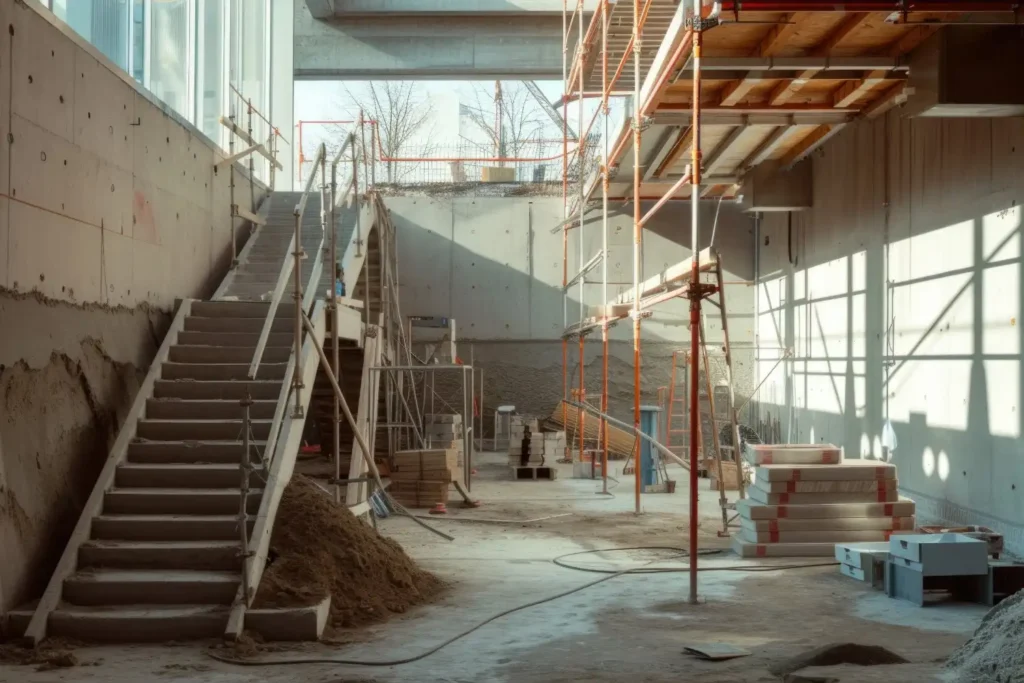
Steps Involved in Foundation Work
Foundation construction follows a systematic process to ensure structural strength and safety.
- Soil Testing
Soil testing helps determine soil bearing capacity, moisture level, and soil type. Engineers use this data to choose the right foundation type.
- Site Excavation
Excavation is carried out according to the foundation layout and depth requirements.
- PCC Layer
Plain Cement Concrete (PCC) is laid to create a clean and level surface before reinforcement work begins.
- Reinforcement Placement
Steel reinforcement bars are arranged according to structural drawings to increase load-bearing strength.
- Formwork Installation
Temporary formwork is placed to hold concrete in the desired shape.
- Concrete Pouring
Concrete is poured into the footing and compacted properly to remove air gaps.
- Curing Process
Curing is done to maintain moisture and improve concrete strength.
Common Problems Caused by Poor Foundation Work
Poorly executed foundation work can create major structural and financial issues later.
Wall Cracks
Weak foundations often cause cracks in walls, ceilings, and floors.
Uneven Floors
Improper settlement can make floors uneven and unstable.
Water Seepage
Poor waterproofing and foundation damage may lead to moisture problems.
Structural Failure
Severe foundation problems can weaken the entire building structure.
This is why professional planning, engineering supervision, and proper construction management are essential throughout the project lifecycle.
Factors That Affect Foundation Selection
Several factors determine the type of foundation required for a project.
Soil Condition
The strength and type of soil play a major role in foundation design.
Building Load
Heavier structures require deeper and stronger foundations.
Groundwater Level
High groundwater levels influence excavation depth and waterproofing methods.
Construction Budget
Foundation type also depends on project budget and construction timeline.
Environmental Conditions
Climate, rainfall, and seismic conditions influence foundation planning.
Importance of Professional Foundation Planning
Foundation work should never be rushed or compromised to reduce costs. Professional builders use engineering analysis, quality materials, and systematic execution to ensure long-term safety.
Efficient management of labour, materials, and timelines also plays an important role in successful foundation construction. Learn more about how experts handle construction execution in this detailed article on how builders manage labour materials and timelines.
Choosing experienced construction professionals helps avoid delays, quality issues, and future structural problems.
How Urban Space Builders Ensures Strong Foundation Work
At Urban Space Builders, foundation work is executed with careful planning, soil analysis, quality materials, and engineering precision. The team focuses on building structures that are safe, durable, and capable of lasting for generations.
From excavation to concrete curing, every stage is monitored to maintain structural quality and long-term reliability.
Whether you are planning a residential home, villa, or commercial project, having the right foundation is the first step toward successful construction.
Conclusion
Foundation work is the backbone of every construction project. It provides strength, stability, and safety to the entire structure. Selecting the right foundation type based on soil condition, building load, and environmental factors is essential for long-lasting performance.
Proper foundation planning not only prevents future structural issues but also improves durability and construction quality. Investing in professional foundation work today can save significant repair and maintenance costs in the future.
If you are planning a construction project and need expert guidance, connect with Urban Space Builders to build your project on a strong and reliable foundation.
Frequently Asked Questions
- What is foundation work in construction?
Foundation work is the process of building the base structure that supports the entire building and transfers its load safely to the ground.
- Why is foundation work important?
Foundation work is important because it provides structural stability, prevents cracks and settlement issues, and increases the durability and safety of the building.
- What are the main types of foundation work?
The two main types of foundation work are shallow foundation and deep foundation. The choice depends on soil condition and building load.
- Which foundation is best for residential buildings?
Shallow foundations like isolated footing and raft foundation are commonly used for residential buildings because they are cost-effective and suitable for lighter structures.
- What causes foundation problems in buildings?
Poor soil conditions, weak construction methods, water seepage, improper planning, and low-quality materials can cause foundation problems.
- How long does foundation work take?
Foundation work duration depends on the project size, soil condition, weather, and foundation type. Residential foundation work usually takes a few weeks.
- What is the difference between shallow foundation and deep foundation?
Shallow foundations transfer loads near the surface, while deep foundations transfer loads to deeper stable soil layers for heavy structures.
- Can poor foundation work affect structural stability?
Yes, poor foundation work can lead to wall cracks, uneven floors, water seepage, and serious structural damage over time.
- How is soil testing important before foundation work?
Soil testing helps engineers understand soil strength and select the correct foundation type for safe and stable construction.
- Who should handle foundation work for a house?
Experienced construction professionals and structural engineers should handle foundation work to ensure safety, durability, and proper execution.
Recent Posts
What Questions Should You Ask During a Site Visit? A …
Let's Build Your Dream Home Now!

What Questions Should You Ask During a Site Visit? A construction site visit gives you much more information than a brochure, quotation …

What Questions Should You Ask During a Site Visit? A construction site visit gives you much more information than a brochure, quotation …

What Questions Should You Ask During a Site Visit? A construction site visit gives you much more information than a brochure, quotation …
How Staircase Design Affects Space and Comfort in a Home A staircase may occupy only one part of a house, but its …