

When planning the plumbing system for a new residence or renovating an existing property, selecting the right piping material is one of the most critical decisions a homeowner faces. Plumbing lines are concealed inside walls, under floor tiles, and within concrete slabs, making future repairs disruptive and expensive. Homeowners evaluating modern thermoplastic piping often compare CPVC vs UPVC pipes to determine which material delivers reliable performance, long service life, and strong value for money.
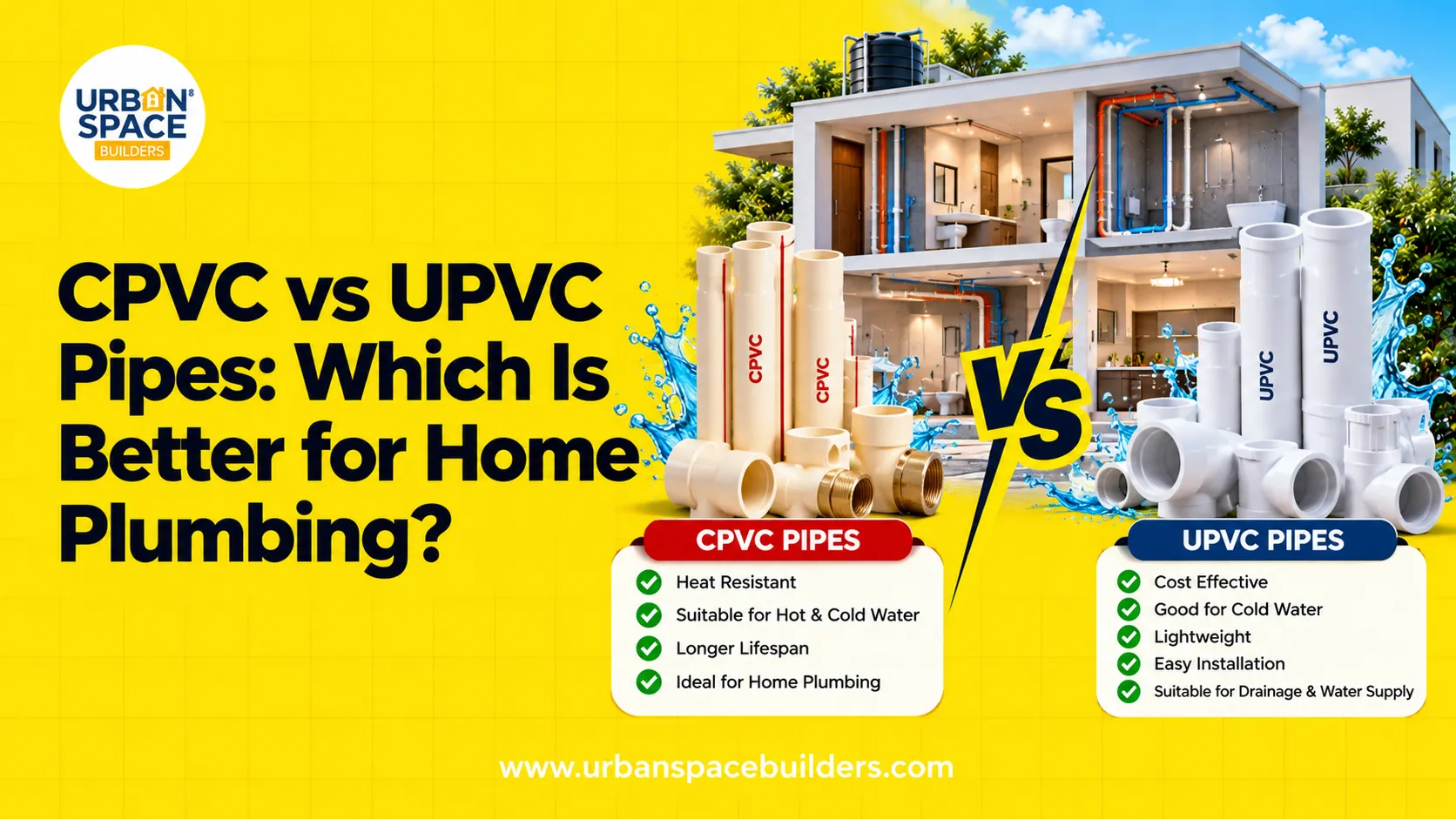
Both Chlorinated Polyvinyl Chloride (CPVC) and Unplasticized Polyvinyl Chloride (UPVC) have largely replaced traditional galvanized iron pipes in residential construction across Chennai. However, their chemical compositions, thermal tolerances, and ideal applications differ significantly. At Urban Space Builders, helping families understand material specifications ensures that every plumbing choice aligns with practical household needs and engineering standards.
Which Is Better for Home Plumbing: CPVC or UPVC?
CPVC is generally better for hot and cold potable water supply lines inside the home because it handles high temperatures up to 93°C without warping or degrading. UPVC is ideal for main cold-water distribution, exterior lines, drainage, and waste management because it offers structural rigidity, high chemical resistance, and lower overall material costs.
Understanding CPVC and UPVC Pipe Materials
To choose the right piping strategy, it helps to understand how these two materials are manufactured and how their physical properties differ under normal household operating conditions.
What Is CPVC Piping?
CPVC stands for Chlorinated Polyvinyl Chloride. It is produced by chlorinating standard PVC resin, which significantly enhances its ability to withstand higher thermal stress and water pressure. CPVC pipes do not corrode, scale, or pit over time, ensuring clean water flow without metallic taste or reddish discoloration. Because of its extra chlorine content, CPVC resists thermal degradation, making it suitable for both hot and cold water supply lines connected to solar water heaters, electric geysers, and boiler systems.
What Is UPVC Piping?
UPVC stands for Unplasticized Polyvinyl Chloride. Unlike standard flexible PVC used in light applications, UPVC contains no added plasticizers, resulting in a rigid, durable material with high mechanical strength. UPVC pipes resist chemical reactions, oxidation, and biological growth, maintaining high structural stability under heavy earth pressure or direct sun exposure when properly treated for UV resistance. UPVC is widely utilized for cold water distribution mains, rainwater harvesting lines, and soil, waste, and rainwater (SWR) drainage systems.
Key Performance Differences: CPVC vs UPVC Pipes
Evaluating pipes requires comparing thermal resistance, structural strength, installation methods, and long-term durability under domestic usage patterns.
1. Temperature Resistance and Thermal Expansion
Temperature handling is the single biggest distinction between CPVC and UPVC. CPVC pipes can safely carry fluids at temperatures up to 93°C (200°F), making them suitable for hot water lines from geysers or solar heating units. In contrast, UPVC pipes are limited to maximum fluid temperatures around 60°C (140°F). Exposing UPVC pipes to continuous hot water can cause thermal softening, sagging, joint failure, or micro-cracking over time. For hot water distribution, CPVC is the recommended engineering choice.
2. Working Pressure and Mechanical Strength
Both materials handle domestic water pressure effectively when specified correctly according to standard pressure ratings (such as Schedule 40, Schedule 80, or SDR ratings). CPVC maintains its pressure-bearing capability across a wide temperature spectrum. UPVC exhibits high impact strength and tensile rigidity at normal ambient temperatures, making it highly durable for main supply lines bringing water from underground storage tanks to overhead terrace tanks.
3. Water Hygiene and Chemical Inertness
Plumbing lines must maintain safe drinking water quality throughout their operational lifespan. Both lead-free CPVC and lead-free UPVC pipes comply with international hygiene standards for drinking water. They do not impart odor, taste, or chemical contaminants into water supplies. Additionally, their smooth internal surfaces prevent mineral scale buildup and bio-film accumulation, ensuring consistent water pressure and clean flow compared to old cast iron or GI pipes.
4. Jointing Methods and Installation Efficiency
Installing thermoplastic pipes requires solvent cementing, where a specialized chemical solvent welding compound temporarily dissolves the surface polymer layer, creating a monolithic fused joint upon setting. CPVC and UPVC use different solvent cements formulated for their respective resin chemistries. CPVC solvent welding cures rapidly and creates strong, leak-proof joints capable of handling thermal expansion stress. UPVC joints cure equally fast and offer strong mechanical joints for long straight runs and vertical risers.
Practical Application Matrix: Where to Use Each Pipe Type
Rather than choosing one material for the entire house, a balanced residential plumbing design uses both materials where they perform best. Integrating both options optimizes performance while controlling material costs.
Internal Potable and Hot Water Lines
Inside bathrooms, kitchens, utility rooms, and hidden wall chases, CPVC is the standard choice for concealed water distribution lines. Because it handles both cold water and high-temperature geyser discharge without thermal distortion, using CPVC for internal supply lines prevents line failure inside tiled walls. When evaluating residential construction services, ensuring lead-free CPVC is specified for internal supply lines helps safeguard water quality and wall integrity.
Cold Water Supply Mains and Riser Pipes
UPVC pipes are often used for external cold water distribution lines, vertical riser pipes carrying municipal or borewell water up to overhead storage tanks, and down-take lines supplying cold water across multiple floors. UPVC provides strong structural rigidity for long vertical shafts and offers an economical solution for high-volume cold water delivery.
Drainage, Soil, and Waste Systems
For sanitary drainage, kitchen waste discharge, and stormwater collection, specialized SWR-grade UPVC pipes are the standard material choice. Their smooth bore prevents blockages, while their resistance to domestic household chemicals ensures decades of service without degradation.
What to Check in Plumbing Specifications and Quotations
When reviewing technical specifications or comparing contractor estimates for a home build, pay close attention to material details rather than general product names.
- Material Grade and Certification: Ensure both CPVC and UPVC pipes carry recognized quality certifications (such as IS or ASTM standards) and are explicitly marked as lead-free for drinking water lines.
- Pressure Ratings and Wall Thickness: Check whether pipes are specified in SDR 11, SDR 13.5, Schedule 40, or Schedule 80. Thicker wall schedules provide higher pressure resistance for high-rise or pressurized pump lines.
- Correct Solvent Cements: Verify that installers use CPVC-specific solvent cement for CPVC lines and UPVC-specific solvent cement for UPVC lines, as interchanging cements leads to joint leaks.
- Scope Inclusions: When reviewing construction packages, check whether concealed plumbing, pressure testing, solar water heater loops, and quality brand fittings are explicitly detailed in the agreement.
Discussing Plumbing Design with Urban Space Builders in Chennai
Planning a durable home plumbing network requires evaluating water quality, pressure requirements, heating systems, and long-term maintenance accessibility. If you are preparing to construct a home or review building drawings, you can read more about Urban Space Builders and our approach to transparent specification planning.
To help us assist you effectively during technical discussions in Chennai, preparing basic project information is useful:
- Architectural floor plans showing bathroom, kitchen, and utility layouts.
- Proposed water heating sources, such as central solar units, heat pumps, or individual geysers.
- Water source details, including municipal supply pressure and borewell water availability.
- Specific brand preferences or quality expectations for sanitary fittings and piping.
Reviewing previous Urban Space Builders projects demonstrates how clear material choices create functional, low-maintenance homes designed for long-term comfort.
Conclusion
Selecting between CPVC vs UPVC pipes is not about finding a single winning material, but applying each pipe type to its ideal job. CPVC excels in hot and cold internal supply lines, while UPVC delivers durable, cost-effective service for external cold-water distribution and drainage systems. To discuss plumbing specifications tailored to your floor plan and budget, reach out to discuss your project with Urban Space Builders today.
Frequently Asked Questions
Can CPVC and UPVC pipes be joined together in the same plumbing line?
Yes, CPVC and UPVC pipes can be joined, but they should never be glued together directly using standard solvent cement because the chemical formulations differ. They must be connected using specialized threaded brass transition fittings or mechanical adapters to ensure a secure, leak-proof seal.
Are CPVC pipes safe for carrying drinking water?
Yes, lead-free CPVC pipes are non-toxic, chemically inert, and fully certified for drinking water distribution. They do not leach harmful chemicals or corrode over time, ensuring safe water quality throughout the home.
Why should UPVC pipes not be used for geyser outlet lines?
UPVC pipes are designed for ambient cold water usage and soften at high temperatures exceeding 60°C. Hot water from electric geysers or solar water heaters can deform UPVC lines, leading to joint leaks, pipe sagging, or burst lines inside concealed walls.
Do CPVC and UPVC pipes require protection from direct sunlight?
Yes, prolonged exposure to direct UV radiation can make unshielded thermoplastic pipes brittle over time. External exposed runs should use UV-stabilized pipe grades, protective insulation wrap, or weather-resistant paint to extend their lifespan.
How long do CPVC and UPVC plumbing pipes typically last?
When high-quality certified pipes are installed with proper solvent jointing and operated within designated pressure and temperature limits, both CPVC and UPVC plumbing systems can last 50 years or more with minimal maintenance.