
When you own a plot measuring 30 feet by 40 …
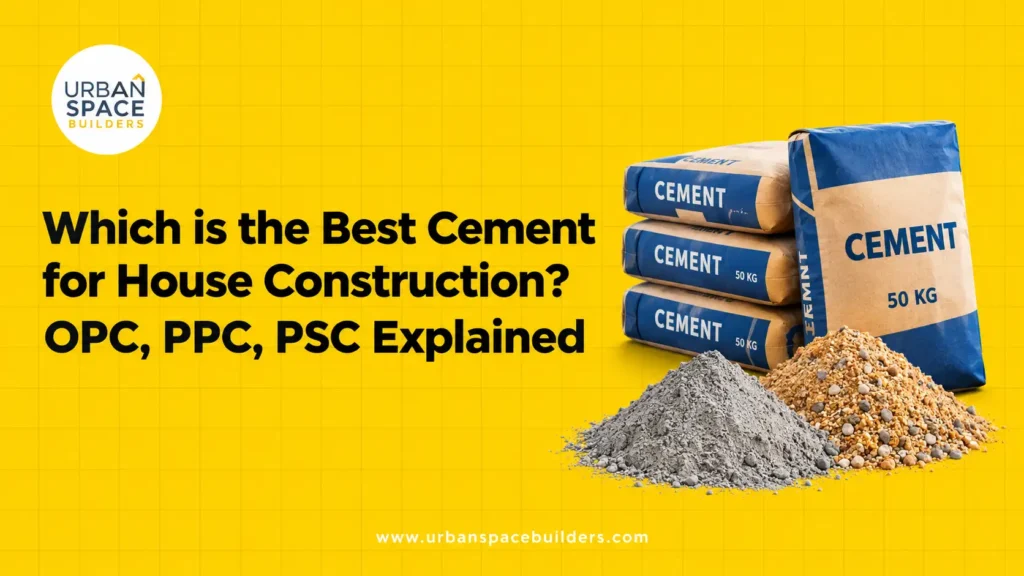
Which is the Best Cement for House Construction? A Guide to Choosing Between OPC, PPC, and PSC Cement
Introduction
Choosing the right cement is an important decision when planning a new home. The type of cement used can influence concrete performance, workability, strength development, and long-term durability. However, there is no single cement that is automatically best for every part of a house. The right choice depends on the structural design, construction activity, exposure conditions, and curing practices.
If you are comparing the best cement for house construction, understanding Ordinary Portland Cement (OPC), Portland Pozzolana Cement (PPC) and Portland Slag Cement (PSC) can help you make a more informed decision. Homeowners in Chennai should also consider coastal exposure in some locations, seasonal rainfall, groundwater conditions, and proper waterproofing.
In this guide, Urban Space Builders explains the main differences between OPC, PPC and PSC, how cement grades work, what to check before purchasing cement, and why your structural engineer’s specifications should guide the final selection.
Understanding the Main Types of Cement for House Construction
Cement is a binding material used in concrete, mortar, and other construction applications. Three commonly used types in residential construction are OPC, PPC, and PSC. They differ in composition and performance characteristics, so selection should depend on the intended application rather than the name or marketing claims alone.
The Bureau of Indian Standards (BIS) lists relevant specifications, including IS 269 for OPC, IS 1489 for PPC, and IS 455 for PSC. Check that the cement supplied for your project conforms to the applicable standard and matches the specification provided by your engineer.
1. Ordinary Portland Cement (OPC)
OPC is widely used in general construction. It is available in different grades, including 33, 43, and 53. These grade numbers relate to specified compressive-strength requirements under standard testing conditions; they do not independently determine the strength of a finished structural member.
OPC may be considered when the project requires particular early-strength characteristics. However, concrete strength also depends on mix design, water-cement ratio, aggregate quality, placing, compaction, and curing.
2. Portland Pozzolana Cement (PPC)
PPC combines Portland cement with pozzolanic materials, such as fly ash or calcined clay, according to the applicable standard. Depending on its formulation and the concrete mix, PPC can provide good workability and durability.
It is commonly considered for masonry, plastering, and various concrete applications. Strength development may be slower at early ages than with some OPC mixes, so curing and construction scheduling must be planned appropriately.
3. Portland Slag Cement (PSC)
PSC contains granulated blast-furnace slag within the limits specified by the relevant standard. It can be useful in environments where resistance to particular chemical exposures is important.
For Chennai projects exposed to coastal conditions or potentially aggressive groundwater, PSC may be worth discussing with the structural engineer. The correct cement type must be selected after considering site exposure, soil and groundwater information, concrete specifications and reinforcement protection.
OPC vs PPC vs PSC: What Is the Difference?
Feature | OPC | PPC | PSC |
Main composition | Portland cement | Portland cement with pozzolanic material | Portland cement with granulated slag |
Early strength | Often develops strength faster, depending on mix | May develop strength more gradually | May develop strength more gradually |
Typical consideration | When early strength is a project requirement | General construction and durability considerations | Projects where exposure resistance is important |
Masonry and plaster | Can be used when specified | Often considered | May be suitable when specified |
Coastal or aggressive exposure | Suitability depends on exposure and design | May be suitable | May be suitable |
Final selection | Engineer’s specification | Engineer’s specification | Engineer’s specification |
This table is a general guide, not a universal specification for every house. Product performance varies, and the project design takes priority.
43 Grade vs 53 Grade Cement: Which Is Better?
OPC 43 and OPC 53 are different cement grades with different specified strength requirements. A higher grade number does not mean that the finished house will automatically be stronger or more durable. The concrete mix, structural design, construction quality, and curing process are equally important.
Do not instruct workers to substitute one grade for another simply because it is marketed as “stronger.” The cement grade and type should match the structural drawings and approved mix design.
Which Cement Is Best for Each Part of a House?
The best cement for a foundation, roof slab, or plastering work depends on the design and site conditions. The following are general considerations to discuss with your engineer:
- Foundation: Consider soil conditions, groundwater, structural loads, and exposure to potentially aggressive chemicals. Soil investigation and the foundation design help determine the concrete specification.
- RCC columns and beams: Follow the structural drawings and approved concrete mix. Do not select cement solely based on the grade number printed on the bag.
- Roof slab: The concrete mix, reinforcement, compaction, and curing plan are essential. Terrace waterproofing and drainage must also be designed properly.
- Brickwork and masonry: Select cement and mortar proportions appropriate to the masonry units and project specification.
- Plastering: Workability, surface preparation, mortar proportions, and curing all influence the finish and crack performance.
- Coastal construction: Ask the engineer to assess exposure conditions and specify appropriate concrete quality, cover to reinforcement, and materials.
Why Does Cement Selection Matter in Chennai?
Chennai’s hot, humid weather, seasonal heavy rainfall, and coastal environment can make moisture management and durability important construction considerations. However, conditions vary between sites, and not every property has the same exposure.
Before selecting cement for a home in Chennai, consider:
- Site and groundwater conditions: Soil and groundwater testing may identify conditions that influence the foundation and concrete specification.
- Coastal exposure: Buildings exposed to sea spray or chloride-rich conditions may need specific durability provisions designed by a qualified professional.
- Rain and drainage: Plan roof slopes, rainwater outlets, site drainage, and waterproofing details to reduce water-related problems.
- Curing arrangements: Make sure workers can maintain the curing process required by the concrete specification, especially during hot or dry weather.
- Material storage: Protect cement bags from rain, ground moisture, and damp walls.
Choosing an appropriate cement type is only one part of achieving durable residential construction. Workmanship, engineering, and moisture protection matter too.
How Can You Check Cement Quality Before Buying?
Before accepting cement for your house, use this practical checklist:
- Check that the product carries the appropriate BIS Standard Mark and certification details, where required.
- Confirm the cement type and grade against your project specification.
- Inspect the packing date and batch details. Ask the supplier or manufacturer about suitability if the cement is old.
- Reject bags that are torn, wet, or visibly damaged.
- Look for hard lumps that may indicate moisture exposure.
- Buy from a reliable supplier and retain invoices and batch information.
- Store bags on a dry raised platform, protected from rain and humidity.
A visual inspection cannot confirm every technical property of cement. If there is a concern about a batch, ask the supplier or manufacturer for documentation and arrange appropriate testing through a qualified laboratory.
Common Cement Selection Mistakes to Avoid
- Choosing only by brand: The type, applicable standard, freshness, and correct application matter.
- Assuming 53 grade is always best: Higher grade alone does not guarantee better performance for every activity.
- Changing cement without approval: Substituting cement on site can affect the approved mix and construction process.
- Ignoring curing: Inadequate curing can affect concrete and mortar performance.
- Using damp or damaged bags: Poor storage can compromise material quality.
- Overlooking waterproofing: Cement alone does not replace a properly designed waterproofing system.
- Buying too much in advance: Large quantities stored in humid conditions may deteriorate before use.
How to Plan Cement Selection Step by Step
For homeowners planning a new house, a clear process can reduce material confusion and avoid unnecessary site changes.
- Obtain the drawings: Ask the architect and structural engineer to prepare the required plans and specifications.
- Assess the site: Complete the necessary soil investigation and identify any relevant groundwater or exposure concerns.
- Confirm material specifications: Record the cement type, grade, and concrete requirements for each applicable construction activity.
- Coordinate with the contractor: Agree who will purchase materials, check deliveries, and maintain batch records.
- Plan curing and storage: Make sure water, labour, covered storage and inspection arrangements are available.
- Monitor construction quality: Inspect material deliveries and work stages, and follow the engineer’s instructions for testing and approvals.
- Keep records: Maintain invoices, test documents, approved drawings, and any written changes to the material specification.
How Can Homeowners Control Costs Without Compromising Quality?
The cheapest cement bag is not necessarily the best overall choice for a project. Compare quotations using the same cement type, grade, quantity, delivery conditions, and applicable specification.
Include material wastage, storage, transport, and the work needed for proper curing in your construction planning. Keep a contingency for unexpected expenses, but do not reduce specified material quality or omit essential inspections to stay within budget.
For a Chennai home, waterproofing, drainage and suitable exposure protection should be considered during planning rather than left entirely to repairs after a problem appears.
Planning a home construction budget? Discuss your project scope, drawings and material requirements with Urban Space Builders before finalising your estimate.
When Should You Consult a Construction Professional?
Consult a qualified structural engineer before deciding cement specifications for foundations, RCC columns, beams and roof slabs. An architect or civil engineer can help coordinate drawings, material specifications, construction sequencing and quality checks.
Professional advice is especially important if the site is near the coast, has unusual soil or groundwater conditions, involves a large foundation, or requires a change to an approved concrete mix. Do not make structural decisions based only on a contractor’s preference or general online recommendations.
Choosing Cement for Residential Construction in Chennai
When planning residential construction in Chennai, consider the plot’s soil conditions, drainage, rainfall exposure, building design, and access for material deliveries. Neighbourhoods such as Anna Nagar, T. Nagar, Velachery, OMR, ECR, Porur, Tambaram and Ambattur represent different site and planning contexts; the right construction specification must be based on the individual property.
If you are comparing house construction materials in Chennai, start with approved drawings and a written material specification. A qualified engineer can help determine which cement type and grade are appropriate for each activity. Homeowners should also confirm applicable planning and building approvals with the relevant authority for their property.
Why Consider Urban Space Builders in Chennai?
Urban Space Builders provides a point of contact for homeowners who want to discuss residential construction requirements in Chennai. Before starting a project, you can discuss the proposed scope, design requirements, budget considerations, and the estimate process.
When requesting a construction quotation, share your plot details and available drawings, and ask what the estimate includes or excludes. This helps you compare proposals more clearly and understand the next steps before committing.
CTA: Contact Urban Space Builders to discuss your construction enquiry.
Conclusion: Choose Cement Based on Your Project Requirements
The best cement for house construction depends on the type of work, structural design and site exposure. OPC, PPC and PSC each have uses, but none should be selected by grade or brand name alone. Check applicable BIS specifications, buy suitable material from a reliable supplier, protect cement during storage, and follow the approved curing plan. For homes in Chennai, pay particular attention to site conditions, drainage and moisture protection. Before finalising your material selection, discuss your drawings and construction requirements with a qualified professional. Contact Urban Space Builders to discuss your home construction scope and quotation requirements.
Recent Posts
Understanding Space Measurements in Residential Construction Walking through a completed …
Let's Build Your Dream Home Now!

When you own a plot measuring 30 feet by 40 feet, you are working with a total area of 1,200 square feet. …

Understanding Space Measurements in Residential Construction Walking through a completed home feels very different from looking at a technical floor plan. One …

Planning a residential project in Chennai requires a clear understanding of the financial commitments involved long before the first brick is laid. …

House Construction Cost in Chennai: 12 Factors That Affect Your Budget Building a house is a major financial decision, and understanding the …
Frequently Asked Questions
1. Which cement is best for house construction in India?
OPC, PPC, and PSC can all be suitable for house construction when they meet the applicable standards and match the project requirements. The best choice depends on the construction activity, concrete specification, exposure conditions, and curing arrangements. Follow your structural engineer’s recommendations rather than selecting cement by brand alone.
2. What is the difference between OPC and PPC cement?
OPC is Ordinary Portland Cement, while PPC is Portland Pozzolana Cement made with specified pozzolanic material. They can differ in early strength development, heat generation, and durability characteristics. The right option depends on the mix design, construction schedule, and application.
3. Is 53 grade cement better than 43 grade cement?
Not necessarily for every construction activity. OPC 53 and OPC 43 have different specified strength requirements, but the strength of finished concrete also depends on mix proportions, aggregates, water, compaction, and curing. The grade should match the approved structural specification.
4. Which cement is suitable for house construction in Chennai?
OPC, PPC or PSC may be appropriate depending on the house design and site conditions. For properties exposed to coastal air, saline groundwater or aggressive soil, a structural engineer should assess the exposure and specify suitable concrete and reinforcement protection.
5. What should I check before buying cement for my house?
Check the applicable BIS certification details, cement type and grade, packing and batch information, bag condition, and supplier reliability. Keep cement dry and protected from moisture. If a batch appears damaged or has been stored for a long time, seek advice from the supplier or manufacturer before use.