
What Questions Should You Ask During a Site Visit? A …
Construction Secrets That Help Homes Last Longer
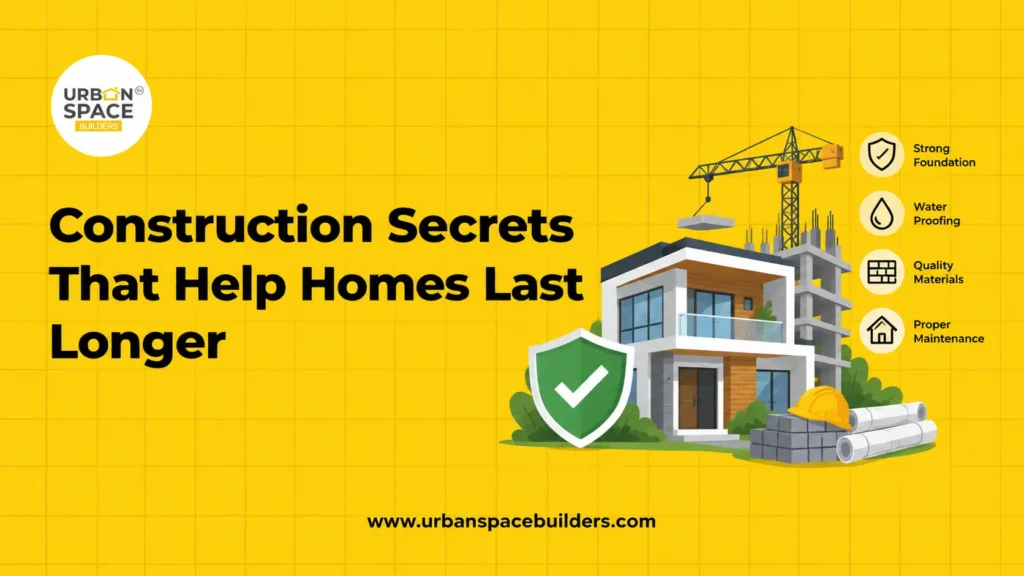
Building a home is a major investment, and every homeowner wants that investment to remain safe and valuable for many years. However, long-lasting home construction is not achieved by focusing on appearance alone. The real strength of a home comes from the quality of planning and construction work behind the walls.
From the foundation to the roof, every stage plays an important role in the life of a building. At Urban Space Builders, we believe homeowners should understand the important factors that contribute to durable and quality residential construction. This guide explains the practical construction secrets that can help a home remain strong for decades.
What Makes a Home Last for Decades?
A long-lasting house is built with proper engineering, quality materials and careful execution. The construction process should begin with understanding the site and soil conditions rather than immediately starting foundation work.
A durable home usually has:
- Proper soil testing
- A structurally designed foundation
- Quality concrete and steel reinforcement
- Skilled construction workmanship
- Effective waterproofing
- Good drainage planning
- Regular quality inspections
- Proper site supervision
When these elements work together, they can reduce the risk of major construction problems in the future.
Why Is Long-Lasting Home Construction Important?
Poor construction decisions may not always become visible immediately. Some problems, such as cracks, water leakage and settlement, can develop gradually over time.
Investing in quality construction from the beginning can help homeowners:
- Improve structural safety
- Reduce future repair expenses
- Protect the property’s long-term value
- Improve living comfort
- Reduce maintenance requirements
- Avoid repeated water and moisture problems
A well-planned home can also make future renovation and maintenance easier.
Start With Soil Testing and Foundation Planning
- One of the most important construction secrets is understanding the soil before designing the foundation.
- Different plots can have different soil conditions. Soil testing helps engineers understand the ground’s ability to support the proposed building. This information can help structural engineers design an appropriate foundation.
- Starting construction without properly understanding the soil may lead to unsuitable foundation decisions. Over time, foundation movement can contribute to cracks and other structural concerns.
- For long-lasting house construction in Chennai, site conditions should always be considered during the planning stage.
Never Compromise on Structural Design
The structural system is the hidden framework that supports the house. It includes important elements such as the foundation, columns, beams and slabs.
A proper structural design considers factors such as:
- Building size and layout
- Number of floors
- Expected building loads
- Soil conditions
- Structural safety requirements
Structural elements should not be decided based only on what appears to have worked in another house. Every project can have different requirements. Working with qualified professionals during the design stage helps homeowners make better decisions before construction begins.
Use Quality Materials Consistently
Good-quality materials play an important role in durable home construction. However, buying good materials alone is not enough. They must also be stored, handled and used correctly at the construction site.
Important materials that require careful attention include:
- Cement
- Steel reinforcement
- Concrete
- Bricks or blocks
- Sand and aggregates
- Waterproofing materials
- Plumbing pipes
- Electrical components
Material quality checks during different stages can help identify issues before they become part of the finished building.
Good Workmanship Matters as Much as Good Materials
Even the best materials may not perform properly when construction workmanship is poor.
For example, concrete requires proper mixing, placement and curing. Steel reinforcement must be positioned according to the structural design. Waterproofing requires careful application and attention to vulnerable areas.
Small mistakes during construction can sometimes lead to costly repairs later. This is why experienced workers, engineers and site supervisors play an important role in home construction quality.
Waterproofing Protects Your Home From Hidden Damage
Water is one of the most common causes of building damage. A small leakage problem can gradually affect walls, ceilings and other parts of a house.
Important areas that need proper moisture protection include:
- Roofs and terraces
- Bathrooms
- Balconies
- External walls
- Water tanks
- Plumbing connection areas
Proper waterproofing should be planned during construction rather than treated only as a repair solution after leakage appears. For Chennai homes, rainfall and moisture exposure should also be considered when selecting suitable waterproofing methods and materials.
Read More: Key Stages of a Residential Construction Project Explained
Plan Plumbing and Drainage Carefully
Poor plumbing and drainage planning can create long-term problems for homeowners. Leaking pipes inside walls or floors can be difficult and expensive to repair.
A good plumbing plan should consider:
- Pipe quality
- Proper pipe connections
- Access for future maintenance
- Bathroom waterproofing
- Water supply requirements
- Effective wastewater drainage
Proper site testing before completing walls and flooring can help identify certain plumbing issues at an earlier stage.
Regular Site Supervision Improves Construction Quality
Construction quality cannot be judged only after the house is completed. Important checks should take place throughout the construction process.
Regular site supervision can help monitor:
- Foundation work
- Reinforcement placement
- Concrete work
- Masonry
- Waterproofing
- Plumbing
- Electrical work
- Finishing quality
Finding and addressing issues during construction is generally easier than carrying out major corrections after project completion.
Follow a Step-by-Step Quality Construction Process
A strong and durable house requires a systematic approach.
Step 1: Understand the Plot
Study the site, available space, soil conditions and project requirements.
Step 2: Complete Proper Design Planning
Prepare architectural and structural designs based on the homeowner’s requirements and applicable construction needs.
Step 3: Create a Realistic Construction Plan
Plan the budget, materials, work sequence and expected project timeline.
Step 4: Begin Foundation and Structural Work Carefully
Follow the approved structural design and carry out regular quality checks.
Step 5: Monitor Each Construction Stage
Inspect important work before moving to the next stage.
Step 6: Protect the Building From Water
Complete waterproofing, plumbing and drainage work carefully.
Step 7: Conduct Final Quality Checks
Inspect the completed work and identify any important issues before handover.
Common Mistakes That Can Reduce a Home's Life
Choosing the Lowest Quote Without Understanding the Scope
A low construction quote may not always include the same materials, specifications or services. Homeowners should compare the complete scope of work before making a decision.
Skipping Soil Testing
Ignoring site and soil conditions can result in construction decisions based on assumptions rather than project-specific information.
Making Structural Changes During Construction
Changing columns, beams or other structural elements without proper professional review can create safety concerns.
Ignoring Waterproofing Details
Treating waterproofing as an unimportant step can lead to repeated leakage and repair problems.
Lack of Regular Quality Checks
Without proper supervision, small construction mistakes may remain unnoticed until later.
How Chennai's Climate Can Affect Home Durability
Chennai’s climate can expose homes to high temperatures, seasonal rainfall and humidity. These conditions can affect different parts of a building over time.
Homeowners can consider climate-related factors such as:
- Roof heat protection
- Effective rainwater drainage
- Suitable waterproofing
- Natural ventilation
- Moisture-resistant materials where required
A home designed with local conditions in mind can provide better long-term comfort and durability.
Expert Tips for Long-Lasting House Construction
The best time to prevent construction problems is before they happen. Homeowners should not rush through the planning stage simply to start construction earlier.
Ask questions about the structural design, material specifications, waterproofing process and quality checks. Understand what is included in the construction scope and maintain clear communication with the project team.
For first-time homeowners, professional guidance can make complex construction decisions easier to understand.
Conclusion
A beautiful home should also be a strong and durable home. The most important construction secrets are not hidden shortcuts but a combination of proper planning, engineering, quality materials, skilled workmanship and careful supervision.
For homeowners planning long-lasting home construction in Chennai, making informed decisions at every stage can help create a safer and more comfortable home for the future. Urban Space Builders supports homeowners with services such as residential home construction, structural planning, site supervision, construction quality checks and project management to help make the building process more organised and transparent.
A well-planned home is not just built for today. It is built with the future in mind.
Also Check: The Role of AI in Modern Construction Projects
Recent Posts
What Questions Should You Ask During a Site Visit? A …
Let's Build Your Dream Home Now!
What Questions Should You Ask During a Site Visit? A construction site visit gives you much more information than a brochure, quotation …
What Questions Should You Ask During a Site Visit? A construction site visit gives you much more information than a brochure, quotation …
What Questions Should You Ask During a Site Visit? A construction site visit gives you much more information than a brochure, quotation …
How Staircase Design Affects Space and Comfort in a Home A staircase may occupy only one part of a house, but its …
Frequently Asked Questions
1. What is long-lasting home construction?
Long-lasting home construction is the process of building a house with proper planning, structural design, quality materials, skilled workmanship and regular quality checks to support long-term durability.
2. Which materials are important for a durable house?
Important construction materials include cement, steel, concrete, bricks or blocks, waterproofing materials, plumbing pipes and electrical components. The right selection depends on the project’s requirements and specifications.
3. Is soil testing necessary before building a house?
Soil testing can provide useful information about ground conditions and soil bearing capacity. This information can help engineers make better foundation design decisions for the project.
4. How can I reduce future home maintenance costs?
Proper construction planning, quality workmanship, suitable materials, effective waterproofing and regular quality checks during construction can help reduce the risk of certain future maintenance issues.
5. How do I choose a house construction company in Chennai?
Review the company’s experience, project scope, technical support, construction process, quality control methods and communication practices. Homeowners should also clearly understand the proposed materials and services before making a decision.