
What Questions Should You Ask During a Site Visit? A …
How to Avoid Unexpected Expenses During Construction
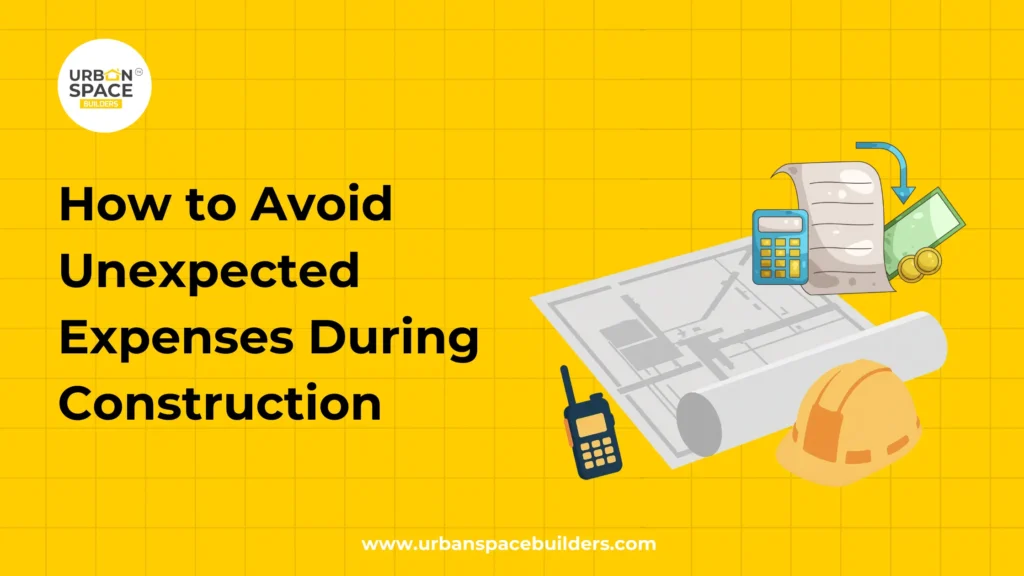
Building a home is a major financial decision. However, many homeowners start construction with a budget in mind and later face expenses they did not expect. Material changes, design modifications, approval costs, site conditions, and rework can all increase the final amount.
Effective construction cost management helps reduce these surprises. With proper planning and clear cost information, homeowners can make better decisions throughout the project. In this guide, Urban Space Builders explains how to plan your budget and reduce unexpected expenses during home construction in Chennai.
What Causes Unexpected Construction Costs?
Unexpected construction costs usually happen when the project is not planned in enough detail before work begins.
Some common causes include:
- Incomplete construction estimates
- Unclear scope of work
- Changes to the building design
- Rising material prices
- Additional foundation requirements
- Approval and permit expenses
- Poor material planning
- Rework caused by quality issues
- Delays in construction
- Unplanned interior requirements
A house construction budget should cover more than just concrete, bricks, and labour. Every stage of the project needs to be considered.
Why Is Construction Cost Management Important?
Construction cost management helps homeowners understand where their money is being spent and make informed decisions before expenses increase.
Proper budget planning can help you:
- Reduce unexpected expenses
- Compare quotations more accurately
- Plan payments properly
- Control unnecessary design changes
- Reduce material wastage
- Improve project planning
- Avoid costly rework
- Maintain better construction quality
- Prepare for genuine emergencies
The goal is not always to choose the cheapest option. Good cost management means getting the right quality and value within a realistic budget.
How Can a Detailed Construction Estimate Prevent Extra Costs?
A detailed estimate is one of the most important tools for controlling construction costs. Instead of accepting a single total amount, homeowners should understand the major cost components, including:
- Site preparation
- Foundation work
- Structural work
- Concrete and steel
- Brickwork
- Electrical work
- Plumbing work
- Waterproofing
- Flooring
- Painting
- Doors and windows
- Labour charges
- Finishing work
A detailed Bill of Quantities (BOQ) can also help explain the quantities and work included in the project.
Before construction begins, ask an important question:
What exactly is included, and what is excluded from the quotation?
This simple step can prevent many hidden construction costs later.
How Do Design Changes Increase Construction Costs?
Design changes during construction can quickly increase your budget.
For example, changing a room layout after walls are completed may require demolition and rebuilding. Moving electrical points after finishing work can create additional labour and material costs.
Before construction begins:
- Finalise the architectural plan.
- Review the room requirements carefully.
- Confirm structural requirements.
- Plan electrical and plumbing locations.
- Discuss major interior requirements early.
An Architect and Structural Engineer can help identify important requirements before construction starts. The earlier a change is made, the easier and less expensive it usually is to manage.
How Should Homeowners Plan a Realistic Construction Budget?
A realistic house construction budget should include both planned work and a reasonable contingency amount.
Step 1: Define Your Total Budget
Decide how much you are comfortable spending on the entire project. Consider construction, approvals, professional services, utilities, and finishing requirements.
Step 2: Get a Detailed Cost Estimate
Avoid relying only on a rough cost-per-square-foot figure. Your actual cost can change based on design, materials, soil conditions, and specifications.
Step 3: Understand the Scope of Work
Make sure the quotation clearly explains what work is included.
Step 4: Plan Your Material Choices
Premium flooring, sanitary fittings, doors, windows, and other finishes can significantly affect the total budget.
Step 5: Keep a Contingency Budget
A contingency budget provides financial flexibility for genuine unforeseen requirements. The exact amount should be decided based on the project’s complexity and your financial comfort.
Step 6: Follow a Payment Schedule
A clear payment schedule linked to construction stages helps homeowners monitor project spending.
What Hidden Costs Should Homeowners Expect During Construction?
Some expenses are often overlooked during early budget planning. Common examples include:
Site Preparation and Soil Testing
The condition of your plot can affect excavation and foundation requirements. Soil testing may help the engineering team understand site conditions before structural work begins.
Building Approval Costs
Depending on the property and applicable requirements, homeowners may need to plan for building approval and related professional services. In Chennai, approval requirements may involve authorities such as CMDA or local bodies, depending on the property’s location and applicable rules.
Waterproofing and Protection
Waterproofing is sometimes underestimated because it is less visible than flooring or interiors. However, poor waterproofing can lead to expensive repairs later.
Utility and External Work
Items such as drainage connections, water arrangements, compound walls, gates, and external development may affect the overall budget.
How Does Site Supervision Help Control Construction Costs?
Regular site supervision can reduce unnecessary expenses by identifying problems early.
A Site Engineer or construction team can monitor:
- Work progress
- Material usage
- Construction quality
- Measurements
- Labour coordination
- Safety practices
- Rework risks
For example, identifying an incorrect measurement before concrete or finishing work is completed can prevent a much larger correction cost later. Good supervision is therefore not just about progress. It is also an important part of construction budget management.
How Can You Reduce Material Wastage?
Material wastage increases construction expenses without adding value to your home.
Homeowners can reduce wastage through:
- Accurate quantity planning
- Proper material storage
- Regular material monitoring
- Timely ordering
- Quality checks during work
- Proper supervision
- Clear communication between teams
Choosing quality building materials and using them correctly is often more valuable than simply selecting the cheapest available option.
Common Mistakes That Lead to Construction Cost Overruns
Mistake: Choosing Only the Lowest Quote
- Why it can be risky: A low initial quotation may not include every requirement.
- Solution: Compare the scope, materials, specifications, and exclusions, not just the final price.
Mistake: Making Frequent Changes
- Why it can be costly: Changes can create demolition, rework, and additional material expenses.
- Solution: Finalise important decisions before construction starts.
Mistake: Ignoring Quality Checks
- Why it can be expensive: Poor workmanship may require repairs or replacement.
- Solution: Include regular quality inspections and site supervision.
Mistake: Not Planning a Contingency
- Why it creates stress: Genuine unexpected requirements can affect cash flow.
- Solution: Keep a practical emergency provision within your overall financial plan.
Real-World Example: How Proper Planning Can Save Money
- Imagine a family in Chennai planning an independent house. They initially focus only on the structural construction cost.
- Later, they realise they also need to budget for approval-related expenses, waterproofing, upgraded electrical requirements, external work, and selected interior finishes.
- If these requirements are discussed during the planning stage, they can be included in the budget earlier. This allows the family to prioritise requirements and avoid sudden financial pressure during construction.
- The same principle applies to duplex homes, NRI projects, renovation projects, and custom homes.
Conclusion
Unexpected expenses can make home construction stressful, but careful planning can significantly reduce avoidable surprises. A detailed estimate, clear scope of work, early design decisions, proper material planning, regular quality checks, and professional site supervision all support better construction cost management.
For homeowners planning Residential Home Construction in Chennai, Urban Space Builders can support the project through construction cost estimation, architectural and structural planning, project management, site supervision, and turnkey construction services. A well-planned project begins with understanding the requirements, the budget, and the work involved before construction starts.
Recent Posts
What Questions Should You Ask During a Site Visit? A …
Let's Build Your Dream Home Now!
What Questions Should You Ask During a Site Visit? A construction site visit gives you much more information than a brochure, quotation …
What Questions Should You Ask During a Site Visit? A construction site visit gives you much more information than a brochure, quotation …
What Questions Should You Ask During a Site Visit? A construction site visit gives you much more information than a brochure, quotation …
How Staircase Design Affects Space and Comfort in a Home A staircase may occupy only one part of a house, but its …
Frequently Asked Questions
1. What is construction cost management?
Construction cost management is the process of planning, estimating, monitoring, and controlling project expenses throughout construction. It helps homeowners understand where money is spent and reduce avoidable budget overruns.
2. What are the most common unexpected expenses in house construction?
Common unexpected expenses include site preparation, foundation changes, approval-related costs, design modifications, waterproofing, utility work, material changes, and rework caused by construction issues.
3. How does a detailed construction quotation prevent extra costs?
A detailed quotation explains the work, materials, and specifications included in the price. It also helps homeowners identify exclusions before construction starts, reducing confusion and unexpected charges later.
4. Why do design changes increase construction costs?
Changes made after construction has started may require demolition, additional labour, new materials, and changes to completed work. Finalising major decisions early can reduce these additional expenses.
5. How can site supervision help manage construction costs?
Site supervision helps monitor progress, material usage, workmanship, and quality. Identifying problems early can reduce material wastage and prevent costly rework.