
What Questions Should You Ask During a Site Visit? A …
Decision Fatigue in Construction: How to Handle Too Many Choices
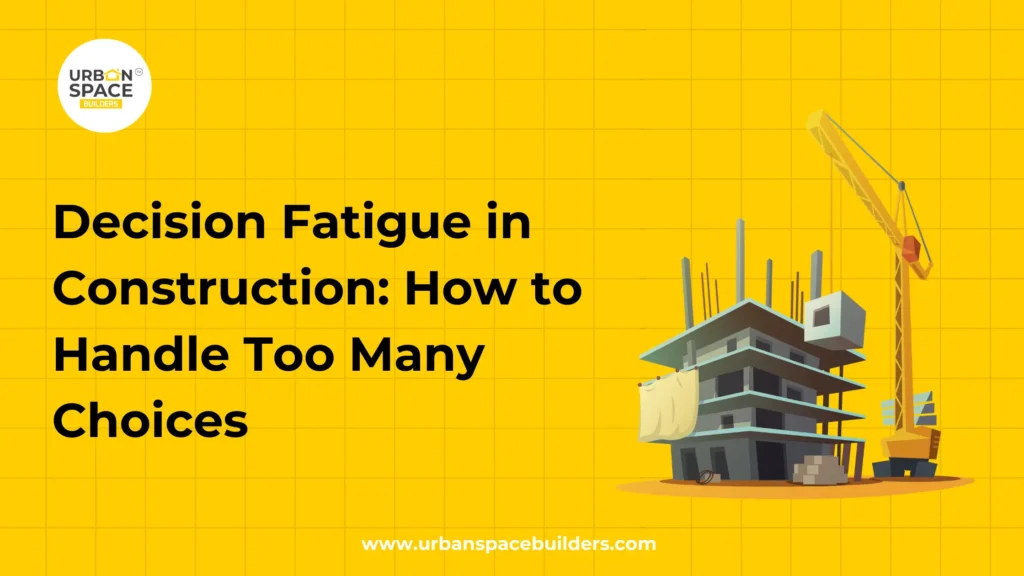
Building your dream home is exciting, but it also involves making hundreds of decisions. You may need to choose a floor plan, construction materials, flooring, doors, windows, electrical fittings, paint colours and interior finishes. When too many choices arrive at the same time, the process can become stressful.
This situation is known as decision fatigue in construction. It can cause homeowners to delay important decisions or make rushed choices simply because they feel overwhelmed.
For homeowners in Chennai, proper house construction planning can make the entire experience easier. At Urban Space Builders, organised planning and professional guidance can help homeowners understand their options and make important decisions at the right stage of construction.
What is Decision Fatigue in Construction?
Decision fatigue in construction is the mental exhaustion that occurs when a homeowner has to make too many home construction decisions within a short period.
For example, a homeowner may begin the day discussing the floor plan with an architect, then need to select tiles, finalise electrical points and choose bathroom fittings. Individually, these decisions may seem simple. However, managing many decisions together can become overwhelming.
This can lead to:
- Delayed construction decisions
- Rushed material selection
- Budget mistakes
- Disagreements between family members
- Changes during construction
- Increased stress
- Poor planning
A house is a long-term investment, so important decisions should not be made simply because a homeowner feels pressured to choose quickly.
Why Do Homeowners Face Too Many Choices During Construction?
Home construction involves several stages, and each stage has different requirements.
During the planning stage, homeowners may need to decide on:
- The size and layout of the house
- Number of rooms
- Floor plan
- Architectural design
- Parking space
- Future expansion requirements
During construction, they may need to consider concrete, steel, bricks, plumbing materials, electrical systems and other building materials.
Later, interior and finishing work introduces even more choices, including:
- Flooring and tiles
- Paint colours
- Doors and windows
- Kitchen layout
- Bathroom fittings
- Lighting design
- False ceiling options
Without a clear construction decision-making process, these choices can quickly become difficult to manage.
Why Is Managing Construction Decisions Important?
Making decisions in an organised way can improve the overall house building process.
Better Budget Control
Last-minute changes can increase construction costs. Early planning allows homeowners to understand available options and make choices that fit their construction budget.
Improved Construction Quality
Material selection should be based on suitability, quality and project requirements rather than temporary trends or pressure.
Fewer Construction Delays
Some activities cannot begin until certain decisions are made. For example, flooring work may be delayed if tiles are not selected on time.
Reduced Stress
Homeowners do not need to think about every construction decision at once. A structured process makes the project easier to manage.
How to Handle Too Many Choices When Building a House
1. Start With Your Priorities
Before selecting materials or designs, identify what matters most to your family.
Ask yourself:
- What is our overall construction budget?
- How many people will live in the house?
- Do we need additional space in the future?
- Which areas of the house require higher investment?
- What are our long-term maintenance preferences?
Clear priorities help eliminate unsuitable options early.
2. Make Important Decisions First
Not every decision has the same impact on your project. Start with major decisions such as:
- Construction budget
- House plan
- Structural design
- Construction materials
- Electrical and plumbing planning
- Major interior requirements
Smaller decisions, such as certain decorative finishes, can be handled later.
3. Create a Home Construction Decision Checklist
A checklist helps homeowners understand what needs to be decided and when.
Your checklist can include:
- Budget approval
- Floor plan selection
- Structural design review
- Material specifications
- Electrical planning
- Plumbing planning
- Tile selection
- Paint selection
- Kitchen design
- Bathroom fittings
- Door and window selection
A well-organised checklist reduces the chances of forgetting important decisions.
4. Avoid Reviewing Too Many Options
Having more choices does not always result in a better decision.
Instead of reviewing dozens of tile designs, first define your budget, colour preference, durability requirements and maintenance needs. Then compare a small number of suitable options.
This approach makes construction material selection faster and less stressful.
5. Set Decision Deadlines
Certain construction decisions must be completed before the next stage begins.
For example, electrical point planning should be finalised before related work progresses. Similarly, flooring materials should be selected before the flooring schedule begins.
A project manager or site engineer can help homeowners understand when each decision is required.
How Professional Builders Help Simplify Construction Decisions
An experienced construction team can reduce unnecessary confusion by presenting relevant options at the appropriate time.
Instead of asking homeowners to understand every technical detail, professionals can explain:
- Why a particular material is suitable
- How different options affect the budget
- Which decisions are urgent
- How a design choice may affect construction
- Whether a change could impact the timeline
Architects, structural engineers and site engineers play different roles in the house building process. Their guidance helps homeowners make informed decisions without becoming overwhelmed by technical information.
Common Mistakes to Avoid
Making Last-Minute Changes
A design change after construction work has started may affect materials, labour, and timelines.
Solution: Review major plans carefully before work begins.
Choosing Only Based on Appearance
A material may look attractive but may not suit your budget, maintenance requirements or intended use.
Solution: Consider quality, durability and practicality along with appearance.
Asking Too Many People for Opinions
Family and friends may provide useful suggestions, but too many opinions can make a simple decision more confusing.
Solution: Identify the key decision-makers early in the project.
Ignoring the Budget
Choosing premium options repeatedly can increase the overall construction cost.
Solution: Define a realistic budget for major categories before making selections.
Delaying Important Decisions
Waiting too long to finalise required materials or designs can affect the construction timeline.
Solution: Follow a planned decision schedule.
Explore smart tools here: Top AI Tools for Smarter Construction Planning
Key Takeaways
- Building a home involves many decisions at different stages.
- Decision fatigue can lead to rushed choices and unnecessary changes.
- A clear construction checklist helps organise the process.
- Major decisions should be prioritised before finishing details.
- Limiting unsuitable options makes choices easier.
- Budget planning should guide material and design selection.
- Professional guidance can simplify technical decisions.
- Good project management can help create a more stress-free home building experience.
Conclusion
Building a home should be an exciting journey, not a constant series of stressful choices. Decision fatigue in construction can affect any homeowner, especially when planning, material selection and design decisions are not properly organised.
The solution is not to make every decision immediately. Instead, homeowners should follow a clear process, prioritise important choices and seek professional guidance when needed.
For homeowners planning residential construction in Chennai, Urban Space Builders can support the process through architectural design, structural design, construction planning, project management, site supervision and quality-focused construction services. With proper planning and coordination, the journey from an idea to a completed home can become much easier to manage.
Also Check: Mistakes in House Layout That Affect Daily Living
Recent Posts
What Questions Should You Ask During a Site Visit? A …
Let's Build Your Dream Home Now!
What Questions Should You Ask During a Site Visit? A construction site visit gives you much more information than a brochure, quotation …
What Questions Should You Ask During a Site Visit? A construction site visit gives you much more information than a brochure, quotation …
What Questions Should You Ask During a Site Visit? A construction site visit gives you much more information than a brochure, quotation …
How Staircase Design Affects Space and Comfort in a Home A staircase may occupy only one part of a house, but its …
Frequently Asked Questions
1. What is decision fatigue in construction?
Decision fatigue in construction is the mental stress homeowners experience when they have to make too many building, design and material choices. It can make the home building process feel confusing and lead to delayed or rushed decisions.
2. Why are there so many decisions during home construction?
A house requires decisions related to planning, design, engineering, materials, electrical work, plumbing and interiors. Each stage has different requirements, which is why organised construction planning is important.
3. How can first-time homeowners simplify construction decisions?
First-time homeowners should create a decision checklist, set a realistic budget and prioritise important decisions. Working with experienced architects, engineers and construction professionals can also make the process easier to understand.
4. Should I finalise all interior choices before construction starts?
Not necessarily. Some major planning decisions should be made early, while certain interior and finishing choices can be selected closer to the relevant stage of construction. A proper project schedule can help determine the right time for each decision.
5. How does project management reduce construction stress?
Project management helps organise tasks, timelines and decisions throughout the house building process. It gives homeowners better clarity about what needs to happen and when, helping reduce confusion and unnecessary delays.