
What Questions Should You Ask During a Site Visit? A …
12 Types of Brick Bonds Used in House Construction
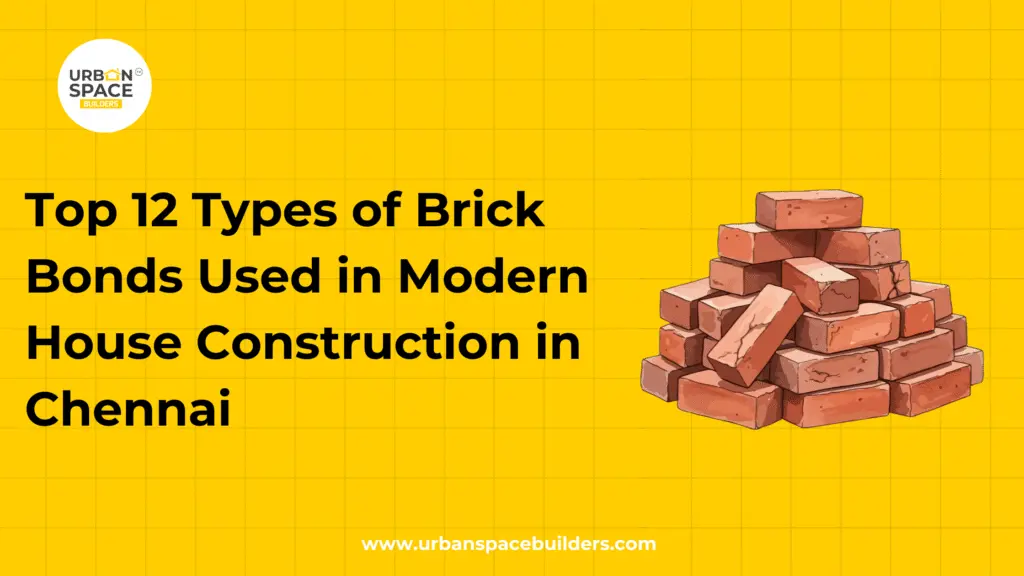
Brickwork plays an important role in the strength, durability and appearance of a home. However, the quality of a brick wall depends not only on the bricks used but also on how those bricks are arranged. This arrangement is known as a brick bond.
Different types of brick bonds are used for different construction needs. Some bonds are suitable for load-bearing walls, while others are mainly used for partitions, garden walls or decorative designs. Choosing the right bond helps distribute the building load, improve wall strength and reduce the risk of cracks.
At Urban Space Builders, we carefully select suitable brick bonding techniques based on the structural design and requirements of each home. This guide explains the 12 commonly used brick bond types in simple terms.
What is a Brick Bond?
A brick bond is the pattern in which bricks are placed and connected using mortar. Mortar is the cement-based material applied between bricks to hold them together.
In good brick masonry, the vertical joints between bricks should not continue in a straight line from one row to another. The joints are usually staggered to connect the bricks properly and spread the load across the wall.
A properly selected brick bond can:
- Improve wall strength
- Distribute structural loads
- Increase wall durability
- Reduce continuous vertical joints
- Improve the appearance of brickwork
- Support better wall finishing
- Reduce the possibility of cracks
Here are the major types of brick bonds used in house construction.
1. Stretcher Bond
A stretcher bond is one of the simplest and most commonly used brick bond patterns. In this pattern, the longer side of every brick is visible on the wall surface. Each row is placed with the vertical joints positioned at the centre of the bricks below.
Stretcher bonds are generally used for half-brick-thick walls. They are suitable for:
- Partition walls
- Compound walls
- Internal non-load-bearing walls
- External walls in framed structures
This bond is easy to build and uses fewer bricks. However, it is not normally recommended for thick load-bearing walls.
2. Header Bond
In a header bond, the shorter end of every brick is visible on the wall surface. Each brick is laid across the wall’s thickness.
This brick bond is suitable for one-brick-thick walls and curved brickwork. It provides better connection across the wall’s width compared to a stretcher bond.
Header bonds may be used for:
- Curved walls
- Circular brick structures
- Foundations
- Thick brick walls
Although it provides good strength, it requires careful brick laying to maintain a consistent appearance.
3. English Bond
The English bond is considered one of the strongest types of brick bonds used in construction. It consists of alternate rows of stretchers and headers. One complete row shows the long faces of the bricks, while the next row shows their short ends.
This arrangement creates strong connections throughout the wall. It is often used for:
- Load-bearing walls
- Foundations
- Residential buildings
- Thick structural walls
- Buildings requiring high wall strength
When comparing an English bond vs Flemish bond, the English bond generally provides greater structural strength. However, it may have a simpler appearance.
4. Flemish Bond
A Flemish bond uses alternating headers and stretchers within the same row. Each row follows a similar pattern, creating a balanced and attractive brick wall design.
This bond offers a combination of strength and visual appeal. It is often used for the front walls of homes where exposed brickwork is part of the architectural design.
Flemish bonds require skilled workers because every brick must be positioned accurately. Poor workmanship can affect both the appearance and strength of the wall.
5. English Garden Wall Bond
The English garden wall bond is a variation of the traditional English bond. It usually includes several rows of stretchers followed by one row of headers.
Because it uses fewer headers, it may not provide the same strength as a standard English bond. However, it is cost-effective and suitable for walls that carry limited loads.
Common applications include:
- Garden walls
- Boundary walls
- Low-height walls
- Decorative outdoor structures
6. Flemish Garden Wall Bond
In a Flemish garden wall bond, one header is placed after a fixed number of stretchers in each row. The exact pattern may vary depending on the wall design.
It creates an attractive surface and uses fewer header bricks than a traditional Flemish bond. This makes it suitable for garden walls, compound walls and decorative brickwork.
It is not usually the first choice for major load-bearing walls in residential buildings.
7. Dutch Bond
The Dutch bond is a modified form of the English bond. It combines alternate header and stretcher rows with additional headers placed at specific points.
These headers improve the connection between different sections of the brick wall. The bond offers good structural stability while creating a distinctive pattern.
Dutch bonds can be used for:
- Load-bearing walls
- Strong external walls
- Traditional buildings
- Exposed brick designs
Proper planning and experienced bricklayers are necessary to achieve the correct pattern.
8. Monk Bond
A monk bond usually places two stretchers between each header. The pattern is repeated across the wall, while the placement changes in the following row to avoid continuous joints.
This bond is mainly chosen for its decorative appearance. It can create an elegant finish for external walls and architectural features.
Since monk bonds require careful planning and skilled workmanship, they may take more time than basic brick bonding methods.
9. Stack Bond
In a stack bond, bricks are placed directly above one another. This creates straight horizontal and vertical lines across the wall.
The clean and modern appearance of stack bonds makes them popular in modern house construction. However, the continuous vertical joints reduce the natural strength of the brickwork.
For this reason, stack bonds may require additional reinforcement. They are mainly suitable for:
- Decorative walls
- Wall cladding
- Non-load-bearing partitions
- Modern building facades
They should not be used for structural walls without proper engineering guidance.
10. Rat Trap Bond
In a rat trap bond, bricks are placed vertically on their edges, creating a hollow space inside the wall. The visible arrangement may look similar to a Flemish bond.
The hollow space reduces the number of bricks and mortar required. It may also improve thermal comfort by reducing heat transfer through the wall. This can be useful in Chennai’s warm climate.
Rat trap bonds can support sustainable construction, but they require skilled workers and proper structural planning. Openings and electrical or plumbing work must also be planned carefully.
11. Herringbone Bond
A herringbone bond places bricks at angles to create a V-shaped pattern. It is mainly used for decorative surfaces rather than structural brick walls.
Common uses include:
- Pathways
- Courtyards
- Patios
- Flooring
- Decorative wall sections
The interlocking layout can provide good resistance to movement when used for paved surfaces. Accurate alignment is essential to maintain the pattern.
12. Zigzag Bond
A zigzag bond arranges bricks in a continuous zigzag pattern. Like the herringbone bond, it is mostly selected for visual appeal and surface applications.
It can be used for garden paths, flooring, patios and decorative outdoor areas. This bond gives residential spaces a unique and attractive appearance.
A stable base and uniform mortar joints are necessary to maintain its durability.
Read More: Understanding the Types of Land and Their Uses in Construction
Tips for High-Quality Brickwork
Even the strongest bond can fail when the workmanship or construction materials are poor. To achieve durable brick wall construction:
- Use good-quality, evenly sized bricks
- Prepare mortar in the correct proportion
- Maintain uniform mortar joints
- Avoid continuous vertical joints
- Check the wall alignment regularly
- Cure the brickwork with sufficient water
- Follow the approved structural drawings
- Ensure proper supervision at every stage
Regular quality inspections can help identify alignment problems, weak joints and material issues before they affect the building.
Build a Strong and Durable Home in Chennai
Understanding the different types of brick bonds helps homeowners make informed construction decisions. However, the right bond must always be selected based on structural requirements, wall function and building design.
Urban Space Builders provides professional residential construction in Chennai with architect-led planning, engineer-supervised execution and stage-by-stage quality checks. From brickwork and structural construction to interior design and final handover, every stage is carefully managed to build a safe and long-lasting home.
Planning to build your house in Chennai? Contact Urban Space Builders to book a consultation and receive expert guidance for your home construction project.
Also Check: Fire Safety Norms for Residential Buildings: A Complete Guide
Recent Posts
What Questions Should You Ask During a Site Visit? A …
Let's Build Your Dream Home Now!
What Questions Should You Ask During a Site Visit? A construction site visit gives you much more information than a brochure, quotation …

What Questions Should You Ask During a Site Visit? A construction site visit gives you much more information than a brochure, quotation …

What Questions Should You Ask During a Site Visit? A construction site visit gives you much more information than a brochure, quotation …

How Staircase Design Affects Space and Comfort in a Home A staircase may occupy only one part of a house, but its …
Frequently Asked Questions
1. What are the different types of brick bonds used in house construction?
Common types of brick bonds include stretcher bond, header bond, English bond, Flemish bond, English garden wall bond, Flemish garden wall bond, Dutch bond, monk bond, stack bond, rat trap bond, herringbone bond and zigzag bond. Each pattern serves a different structural or decorative purpose.
2. Which brick bond is strongest for house construction?
The English bond is generally considered one of the strongest brick bonds. Its alternate rows of headers and stretchers create a strong connection across the wall. It is commonly used for foundations, load-bearing walls and thick structural walls.
3. What is the difference between English bond and Flemish bond?
An English bond uses separate alternating rows of headers and stretchers. A Flemish bond places headers and stretchers alternately within the same row. English bond usually provides greater strength, while Flemish bond offers a more decorative appearance.
4. Which brick bond is suitable for non-load-bearing walls?
Stretcher bond is commonly used for non-load-bearing walls, internal partitions and external walls in framed buildings. Because it is usually only half a brick thick, it is not recommended for heavy load-bearing walls without proper structural support.
5. How do I choose the right brick bond for my home?
The right brick bond depends on the wall thickness, structural load, building design, required appearance and budget. A structural engineer or experienced house construction company should select the bond based on approved drawings and site requirements.