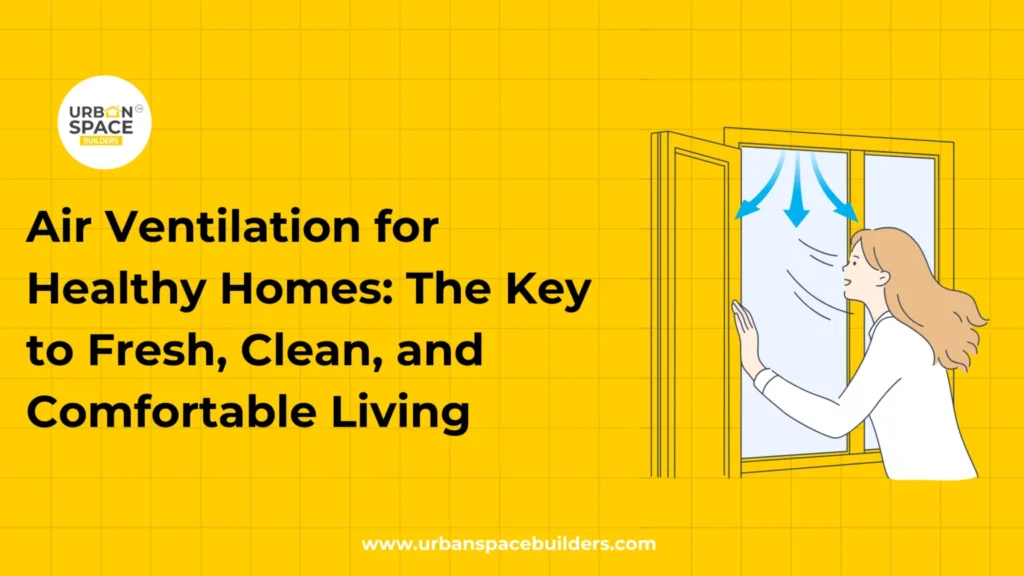
Air Ventilation for Healthy Homes: The Key to Fresh, Clean, and Comfortable Living

Air Ventilation for Healthy Homes

Introduction

Air ventilation is one of the most critical yet underestimated elements of healthy home design. A beautifully designed house can still become uncomfortable and unhealthy if fresh air circulation is poor. In modern urban homes, especially in cities like Chennai, inadequate ventilation can lead to heat buildup, humidity, mold growth, and poor indoor air quality.

At Urbanspace Builders, ventilation planning is treated as a core design principle, not an afterthought. Leading builders in Chennai now integrate smart ventilation strategies into home layouts to ensure long-term comfort, health, and energy efficiency. This guide explains why proper air ventilation is essential, how it works, and how it can be optimized for modern homes.

Understanding Indoor Air Quality (IAQ)

Indoor Air Quality (IAQ) refers to the cleanliness and safety of the air inside a home. Poor IAQ can result from trapped pollutants such as dust, pollen, pet dander, volatile organic compounds (VOCs), and excess carbon dioxide.

In compact urban homes, especially 1 BHK house plans, limited space makes ventilation even more critical. Proper airflow helps dilute pollutants and remove stale air, improving respiratory health and overall comfort. If you are planning a compact home, reviewing a well-ventilated 1 BHK house plan can help you understand how layout impacts airflow.

The Science Behind Air Ventilation

Ventilation works on the principle of controlled air exchange. Fresh air enters the home while polluted air exits, maintaining a balance between oxygen levels, humidity, and temperature.

Key factors influencing ventilation include:

  • Pressure differences between indoor and outdoor air
  • Temperature variation
  • Wind direction
  • Building orientation
  • Structural design of walls and openings

The structural system of a house, whether load-bearing or framed, also affects ventilation planning. Understanding how walls carry loads helps builders position openings without compromising safety.

home ventilation systems
indoor air quality in homes

Types of Home Ventilation Systems

Natural Ventilation

Natural ventilation uses windows, ventilators, courtyards, and architectural alignment to promote airflow. Cross ventilation, where air enters from one side and exits from another, is one of the most effective and energy-saving methods.

Benefits:

  • Zero energy consumption
  • Improves thermal comfort
  • Ideal for tropical climates like Chennai

Mechanical Ventilation

Mechanical systems use fans, ducts, and controls to regulate airflow. Common types include:

Exhaust Ventilation
Removes stale air from kitchens, bathrooms, and utility areas.

Supply Ventilation
Introduces filtered fresh air while managing humidity.

Balanced Ventilation
Controls both intake and exhaust for consistent airflow.

HRVs and ERVs
Heat Recovery Ventilators and Energy Recovery Ventilators maintain indoor temperature while exchanging air efficiently.

Hybrid Ventilation Systems

Hybrid ventilation combines natural airflow with mechanical assistance. These systems automatically adapt to outdoor temperature, humidity, and air quality levels, offering flexibility and efficiency. This approach is increasingly used in modern home construction in Chennai, where climate conditions vary throughout the year.

Health Benefits of Proper Air Ventilation

Efficient air ventilation for healthy homes delivers measurable health benefits:

  • Reduces allergens like dust and pollen
  • Prevents mold and dampness
  • Controls indoor humidity levels
  • Lowers carbon dioxide concentration
  • Improves sleep quality and mental focus
  • Reduces respiratory and allergy-related issues

Homes designed with proper airflow support long-term wellness for all age groups.

Energy Efficiency and Ventilation

Ventilation and energy efficiency go hand in hand. Poor airflow increases dependency on air conditioning, raising electricity costs. Smart ventilation planning reduces energy consumption while maintaining comfort.

Energy-efficient ventilation features include:

  • HRV and ERV systems
  • Automated airflow sensors
  • Zoned ventilation
  • Smart exhaust controls

Urbanspace Builders incorporate ventilation planning during the architectural stage itself to balance airflow and energy efficiency.

Best Practices for Optimizing Home Ventilation

  • Strategic window placement for cross ventilation
  • Adequate spacing between buildings
  • Ventilated staircases and corridors
  • Exhaust fans in moisture-prone areas
  • Regular HVAC filter cleaning
  • Use of breathable building materials

These practices are especially important in compact and multi-level homes.

Smart Ventilation Technologies for Modern Homes

Modern homes now integrate technology-driven ventilation systems:

  • Real-time IAQ monitoring sensors
  • AI-powered airflow adjustment
  • Integration with smart home automation
  • Temperature and humidity synchronization

These systems ensure consistent indoor comfort with minimal manual intervention.

Common Ventilation Mistakes to Avoid

  • Over-sealing homes without air exchange
  • Ignoring humidity control
  • Blocking airflow with poor furniture placement
  • Improper duct routing
  • Poor coordination between structural and ventilation planning

Avoiding these mistakes ensures long-term indoor air quality.

Conclusion: Building Healthier Homes with Smart Ventilation

Air ventilation is no longer optional in modern housing. It is essential for health, comfort, and sustainability. From natural airflow planning to advanced smart ventilation systems, every home benefits from thoughtful ventilation design.

Urbanspace Builders, among trusted builders in Chennai, specialize in constructing homes that breathe naturally while remaining energy-efficient and structurally sound. By prioritizing air ventilation for healthy homes and offering transparent guidance on the cost to build a new home, you invest not just in a house, but in long-term well-being.

Frequently Asked Questions

  1. Why is air ventilation important for healthy homes?
    Air ventilation removes pollutants, controls humidity, and supplies fresh oxygen, improving health and comfort.
  2. What is the best ventilation system for homes in Chennai?
    A combination of natural cross ventilation and mechanical exhaust systems works best for Chennai’s climate.
  3. Does home structure affect ventilation?
    Yes. Structural design determines window placement and airflow paths, impacting ventilation efficiency.
  4. Can small homes have good ventilation?
    Absolutely. With proper planning, even compact homes can achieve excellent airflow.
  5. Do builders in Chennai plan ventilation during construction?
    Reputed builders like Urbanspace Builders integrate ventilation planning at the design stage itself.

Recent Posts

Planning to Build a House in 2026? Here’s What You …

Planning to Build a House in 2026? Here’s What You …

Let's Build Your Dream Home Now!

From Blueprint to Reality Construction Workflow Explained

Planning to Build a House in 2026? Here’s What You Should Know Building your own house is one of the biggest life …

Foundation types used in residential construction

Planning to Build a House in 2026? Here’s What You Should Know Building your own house is one of the biggest life …

solar panel installation cost for new homes in Chennai

Planning to Build a House in 2026? Here’s What You Should Know Building your own house is one of the biggest life …

Stages of home construction

Planning to Build a House in 2026? Here’s What You Should Know Building your own house is one of the biggest life …

Scroll to Top