

What Questions Should You Ask During a Site Visit? A …
Coarse Aggregate in Construction: Types, Properties, and Best Practices

Concrete may look simple, but the quality of each material inside it can affect the strength and life of a home. One of the most important materials is coarse aggregate in construction.
Coarse aggregate forms a major part of concrete and helps provide strength, stability and volume. Poor-quality aggregate can affect concrete performance even when good cement and steel are used.
At Urban Space Builders, careful material selection and site-level quality checks are important parts of residential construction. In this guide, homeowners can understand the types, properties, uses and best practices for selecting coarse aggregate for house construction.
What Is Coarse Aggregate in Construction?
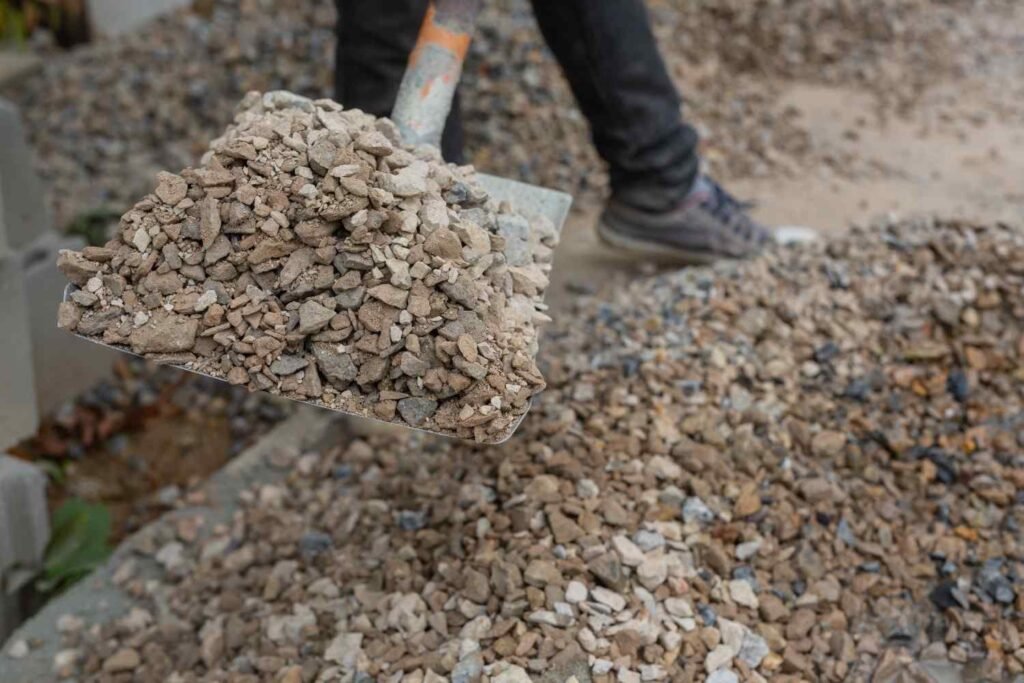
Coarse aggregate is the larger stone material mixed with cement, sand and water to make concrete. In common concrete classification, particles larger than the fine aggregate fraction are treated as coarse aggregate.
Common examples include:
- Crushed stone
- Crushed granite
- Gravel
- Crushed rock
- Certain processed or recycled aggregates
The right aggregate depends on the structural requirement, concrete mix design and advice of the structural or civil engineer.
The Bureau of Indian Standards’ IS 383:2016 covers requirements for coarse and fine aggregates used in concrete, including grading and important physical and mechanical properties.
Why Is Coarse Aggregate Important in Concrete?
Coarse aggregate provides the solid framework inside concrete.
Good-quality aggregate can help with:
- Concrete strength
- Dimensional stability
- Long-term durability
- Proper load distribution
- Better control of concrete volume
- Suitable workability when correctly graded
- More consistent construction quality
For homeowners, proper material selection reduces the risk of problems caused by weak, dirty, poorly graded or unsuitable aggregate.
What Are the Main Types of Coarse Aggregate?
1. Crushed Stone Aggregate (Angular)
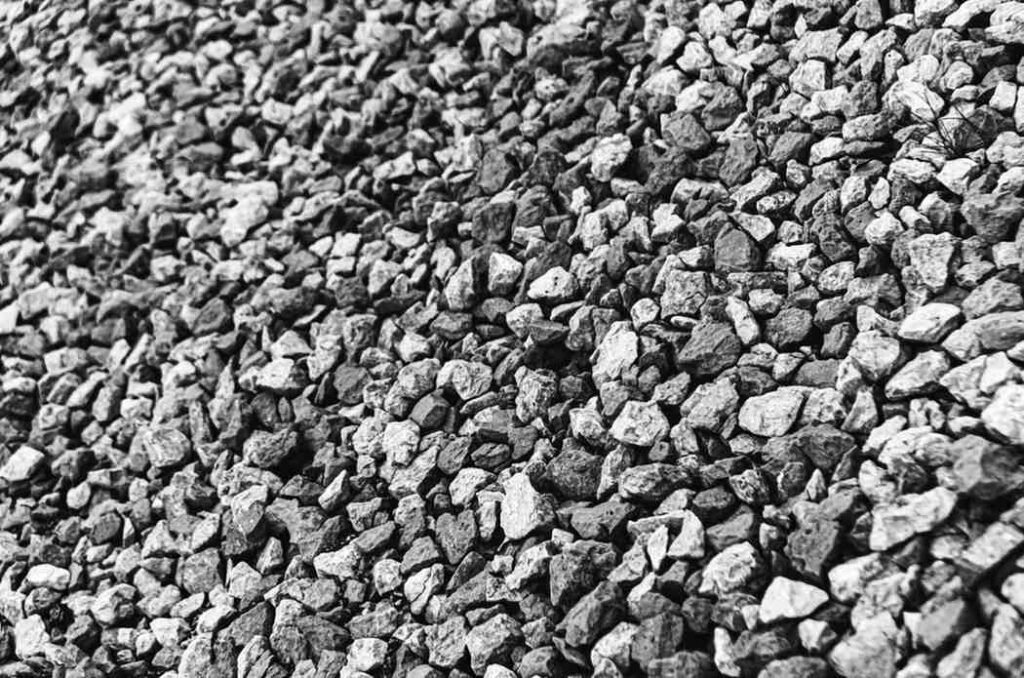
- Crushed stone is produced by crushing larger rocks into controlled sizes. Its angular surface can provide good bonding with cement paste.
- It is commonly used in RCC work such as foundations, columns, beams and slabs.
2. Gravel Aggregate (Rounded)
- Gravel may have smoother and more rounded particles.
- Its smooth shape can improve concrete workability, although the final selection should always depend on the required concrete design.
3. Granite Aggregate
- Crushed granite is commonly selected where strong and durable aggregate is required.
- Its suitability should still be confirmed through proper material quality and testing.
4. Basalt Aggregate
- Basalt is another strong rock that may be processed into construction aggregate.
- Its use depends on local availability, project specifications and engineering requirements.
5. Recycled Aggregate
- Recycled aggregate can be produced from processed construction and demolition materials.
- Its use in structural concrete requires careful quality control and compliance with applicable specifications.
Natural vs Crushed vs Recycled Aggregate
Different coarse aggregates have different sources and properties.
- Natural Aggregate: Obtained from natural sources such as gravel deposits. Its cleanliness, grading, strength and suitability should be checked before use.
- Crushed Aggregate: Produced by crushing hard rock into required sizes. It is commonly used for structural concrete because its angular surface can provide good bonding with the cement paste.
- Recycled Aggregate: Produced from processed construction and demolition materials. It can be useful in suitable applications but requires careful quality testing and control.
The best option should not be selected based only on price. Structural requirements, concrete specifications and material test results are more important.
What Properties Should Good Coarse Aggregate Have?
Strength
Aggregate should be strong enough to handle the loads expected in the concrete structure.
Proper Size and Grading
A good combination of aggregate sizes helps particles pack efficiently inside the concrete. Poor grading can create more empty spaces, increasing the amount of cement paste needed.
Good Shape
Excessively flaky or elongated particles can affect concrete quality and workability. Well-shaped aggregate generally provides better packing and handling.
Clean Surface
Aggregate should be reasonably free from harmful clay, dust, organic matter and other unwanted materials.
Low Water Absorption
Highly absorbent aggregate can affect the water available in the concrete mix. Water absorption should therefore be considered when designing and controlling the mix.
Durability
Aggregate should resist weathering and breakdown during the expected service life of the building.
What Size Coarse Aggregate Is Used for Concrete?
Aggregate size varies according to the structural element and concrete mix design.
Common nominal aggregate sizes used in construction include 10 mm and 20 mm, while other sizes may be specified for particular applications.
For residential RCC construction, aggregate size should never be selected simply because one size is commonly available.
Engineers consider factors such as:
- Structural element dimensions
- Reinforcement spacing
- Concrete grade
- Required workability
- Method of placing concrete
- Structural design
BIS documentation for IS 383 includes grading requirements covering common nominal coarse aggregate sizes such as 10 mm and 20 mm, among others.
Read More: Apartment vs Independent House: Which is the Right Choice for You?
Where Is Coarse Aggregate Used in House Construction?
Coarse aggregate is widely used in concrete work including:
- Foundation concrete
- Footings
- Plinth beams
- RCC columns
- RCC beams
- Roof slabs
- Staircases
- Retaining structures
- Driveways and other concrete works
Different structural elements may require different concrete specifications, so the same aggregate selection should not automatically be used everywhere without engineering review.
How Does Coarse Aggregate Affect Concrete Strength?
- Concrete performance depends on the complete mix rather than any single material.
- However, aggregate affects the internal structure of concrete.
- Strong, properly graded and clean aggregate can help create dense and stable concrete. Weak or unsuitable aggregate may reduce overall concrete performance.
- Aggregate shape also affects how easily fresh concrete can be mixed, placed and compacted.
- For this reason, engineers consider aggregate together with cement content, sand, water-cement ratio, reinforcement and concrete grade.
How to Choose Coarse Aggregate for House Construction
Follow these practical steps:
- Check the source
Buy aggregate from a reliable supplier with consistent material quality. - Confirm the required size
Follow the structural engineer’s concrete specification. - Inspect cleanliness
Avoid material containing excessive soil, clay, organic matter or unwanted dust. - Check particle shape
Watch for excessive flaky or elongated particles. - Verify grading
Properly graded aggregate helps achieve better particle distribution. - Conduct testing when required
Important projects should use relevant laboratory testing based on project specifications. - Store the material correctly
Keep aggregates away from soil, waste and contamination at the construction site.
How Is Coarse Aggregate Quality Tested?
Aggregate testing can evaluate characteristics such as:
- Particle size and shape
- Specific gravity
- Water absorption
- Crushing resistance
- Impact resistance
- Abrasion resistance
- Soundness
- Flakiness and elongation
- Harmful or unwanted materials
The BIS IS 2386 series covers standard testing methods for aggregates, including particle size and shape, deleterious materials, specific gravity, absorption, mechanical properties and soundness.
Common Mistakes to Avoid
- Using dirty aggregate: Soil or unwanted material can affect concrete quality. Use clean material from a reliable source.
- Selecting aggregate only by price: Lower material cost does not always mean better project value. Consider quality and specification first.
- Ignoring aggregate size: Using an unsuitable size may affect concrete placement, especially around reinforcement.
- Poor site storage: Aggregate placed directly on contaminated ground can collect soil and waste.
- Changing materials during construction: Sudden changes in aggregate source or properties can affect concrete consistency.
Conclusion
Choosing the right coarse aggregate in construction is an important part of building a strong and durable home. Aggregate size, strength, grading, cleanliness and source should be checked together with the overall concrete mix and structural requirements.
Urban Space Builders follows planned material selection, engineering supervision and construction quality checks for residential home construction in Chennai. If you are planning an individual house, duplex home or turnkey construction project, discussing materials and concrete specifications early can help you make better construction decisions.
Also Check: How Much Does it Cost to Build a Home?
Recent Posts
What Questions Should You Ask During a Site Visit? A …
Let's Build Your Dream Home Now!

What Questions Should You Ask During a Site Visit? A construction site visit gives you much more information than a brochure, quotation …

What Questions Should You Ask During a Site Visit? A construction site visit gives you much more information than a brochure, quotation …

What Questions Should You Ask During a Site Visit? A construction site visit gives you much more information than a brochure, quotation …

How Staircase Design Affects Space and Comfort in a Home A staircase may occupy only one part of a house, but its …
Frequently Asked Questions
1. Can the same coarse aggregate be used for foundations, columns and slabs?
It may be possible in some projects, but aggregate selection should follow the structural and concrete specifications for each application. The engineer should confirm the required size and mix.
2. Is crushed stone better than natural gravel?
Both can be suitable when they meet the required quality standards. Crushed stone generally has a more angular surface, while rounded gravel may offer different workability characteristics.
3. Why is aggregate grading important?
Good grading creates a better distribution of particle sizes. This helps reduce unnecessary voids and supports a more consistent concrete mix.
4. Should homeowners ask for aggregate testing?
Testing may be appropriate depending on the project’s specifications, source of materials and quality-control requirements. Your engineer or construction company can determine which tests are necessary.
5. Can poor aggregate cause cracks in concrete?
Concrete cracks can have many causes, including design, water content, workmanship, curing, movement and material quality. Poor aggregate quality can contribute to performance problems but should not automatically be considered the only cause.