- +1 (212)-695-1962
- info@elementskit.com
- 463 7th Ave, NY 10018, USA.
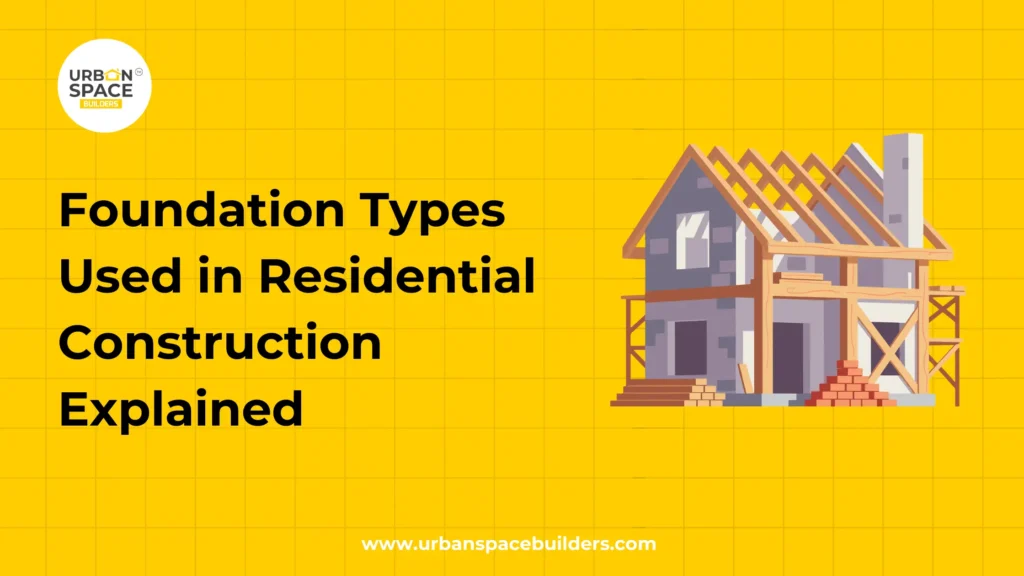
Foundation Types Used in Residential Construction Explained
The foundation is the most critical structural element of any home. It carries the entire load of the building and transfers it safely to the ground. Choosing the right foundation types used in residential construction directly impacts the safety, durability, and long-term performance of a house. A well-designed foundation prevents cracks, uneven settlement, moisture problems, and structural failure.
In residential construction, foundation selection depends on soil condition, climate, water table level, building load, and budget. At Urbanspace Builders, every home is planned with detailed soil analysis and expert engineering to ensure the most suitable foundation is chosen. This guide explains the most commonly used residential foundation types, their advantages, limitations, and how to choose the best foundation for your home with confidence.
Why Foundation Selection Is Important in Home Construction
A foundation does more than support walls and columns. It protects the structure from ground movement, moisture intrusion, and environmental stress. Poor foundation planning can lead to wall cracks, uneven floors, water seepage, and expensive repairs.
Before finalizing any foundation, professional coordination between the builder, architect, and structural engineer is essential. Each professional plays a specific role in ensuring structural safety and cost efficiency. You can understand these roles better by reading Builder vs Architect vs Engineer
1. Slab on Grade Foundation
A slab foundation is one of the most widely used foundation types in residential construction, especially in cities like Chennai where soil conditions are stable and frost is not a concern.
This foundation consists of a single concrete slab poured directly on the ground. Steel reinforcement is added to improve strength and crack resistance.
Slab foundation houses are cost effective and faster to construct. They require minimal excavation and are ideal for single or double storey homes. However, plumbing and electrical repairs can be difficult because utilities are embedded within the slab.
This foundation type is best suited for flat plots with good soil bearing capacity and proper drainage.
2. Crawl Space Foundation
A crawl space foundation elevates the house slightly above ground level, creating a small gap between the soil and the floor structure. This space allows access to plumbing, electrical wiring, and drainage systems.
Crawl space foundations offer better moisture protection compared to slabs and are useful in areas with moderate groundwater levels. They also help improve ventilation and reduce floor dampness.
However, proper waterproofing and pest control are essential. Poor maintenance can lead to mold growth and structural decay over time.
3. Basement Foundation
Basement foundations are deeper foundations that create additional usable space below ground level. This space can be used for storage, utility rooms, or even living areas.
Basement foundation for homes provides excellent load distribution and is suitable for colder regions or large residential structures. It also adds value to the property.
The downside is higher construction cost and the need for advanced waterproofing systems. Poor drainage planning can lead to water seepage and long-term maintenance issues.
Basement design must align with ceiling height standards to ensure comfort and usability. You can explore this aspect in detail at Standard Ceiling Height Explained
4. Pier and Beam Foundation
Pier and beam foundations use concrete piers placed deep into the ground to support beams that hold the house structure. This system is commonly used in areas with weak soil, expansive clay, or flood prone zones.
This foundation type allows flexibility and easier repair if settlement occurs. It also improves air circulation under the home.
However, it requires precise engineering and higher material costs compared to slab foundations. Regular inspection is necessary to maintain long-term stability.
5. Raft Foundation
A raft foundation consists of a thick reinforced concrete slab covering the entire footprint of the house. It spreads the building load evenly across weak soil areas.
Raft foundations are used when soil bearing capacity is low or when differential settlement is expected. They are commonly chosen for large residential villas or homes built on reclaimed land.
Although costlier than standard slabs, raft foundations provide excellent stability and reduce structural stress.
Shallow vs Deep Foundation in Residential Buildings
Shallow foundation for houses includes slab, crawl space, and raft foundations. These are suitable when soil close to the surface can safely support the building load.
Deep foundation for residential buildings includes pier and pile foundations. These are required when surface soil is weak or when heavy loads must be transferred to deeper soil layers.
The choice depends on soil testing results, plot conditions, and structural design.
Factors to Consider When Choosing a Foundation
Soil testing for foundation is the first and most important step. It helps determine soil strength, moisture content, and bearing capacity.
Climate and rainfall patterns affect foundation depth and waterproofing needs. High groundwater levels require stronger drainage systems.
Budget planning is essential. While slab foundations are affordable, basements and deep foundations involve higher excavation and material costs. Foundation waterproofing is crucial for preventing dampness, mold, and concrete deterioration. Proper slope, drainage pipes, and sealing compounds improve foundation lifespan.
Conclusion
Understanding foundation types used in residential construction helps homeowners make informed decisions that protect their investment for decades. Each foundation type has specific advantages based on soil condition, climate, and building design.
Whether you choose a slab, crawl space, basement, pier, or raft foundation, expert planning and proper execution are key to a safe and durable home. A home construction cost calculator helps estimate expenses and plan your budget effectively.
If you are planning a residential project, selecting the right foundation at the design stage will save time, money, and maintenance costs in the long run.
Frequently Asked Questions
- What are the common foundation types used in residential construction
The most common foundation types used in residential construction are slab on grade, crawl space, basement, pier and beam, and raft foundations. The choice depends on soil condition, climate, and building load.
- Which foundation is best for residential homes
The best foundation for a home depends on soil strength, groundwater level, and budget. Slab foundations suit stable soil, while pier or raft foundations are better for weak soil conditions.
- What is the difference between shallow and deep foundation in houses
Shallow foundations transfer load near the ground surface and are used for light residential buildings. Deep foundations transfer load to deeper soil layers and are used when surface soil is weak.
- Is slab foundation safe for residential construction
Yes, slab foundations are safe for residential construction when soil conditions are stable and proper reinforcement and drainage are provided during construction.
- Why is soil testing important before choosing a foundation
Soil testing helps determine bearing capacity, moisture content, and soil type. This ensures the foundation is designed to prevent settlement, cracks, and structural failure.
- How long does a residential foundation last
A well designed and properly maintained residential foundation can last more than 50 to 100 years depending on construction quality and environmental conditions.
Recent Posts
Planning to Build a House in 2026? Here’s What You …
Let's Build Your Dream Home Now!
Planning to Build a House in 2026? Here’s What You Should Know Building your own house is one of the biggest life …