
What Questions Should You Ask During a Site Visit? A …
5 Reasons to Hire a Construction Company Equipped with Advanced Construction Management Tools
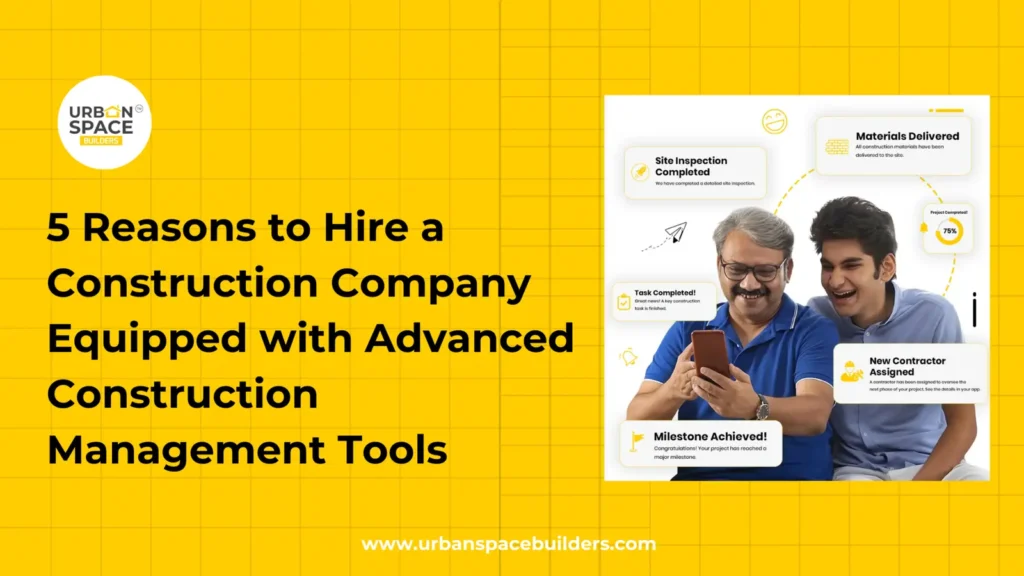
Building a home involves hundreds of activities, from architectural planning and material purchases to labour management, inspections and final handover. Without proper coordination, even small communication gaps can lead to delays or confusion. Modern Construction Management Tools help construction companies manage these activities in a more organised way.
For homeowners in Chennai, choosing a builder that uses digital project management can also make it easier to understand how the project is progressing. Urban Space Builders combines residential construction services with smart construction progress tracking to provide homeowners with better visibility during different stages of home construction.
Here are five important reasons why working with a technology-enabled construction company can make your home-building experience easier.
What Are Construction Management Tools?
Construction Management Tools are digital systems or software used by builders, engineers and project managers to plan and monitor construction projects.
Depending on the platform, these tools can help manage:
- Construction schedules
- Project milestones
- Site progress
- Material requirements
- Labour activities
- Construction expenses
- Site photographs
- Quality inspections
- Documents
- Tasks
- Engineer updates
- Homeowner communication
Instead of maintaining information across multiple notebooks, spreadsheets or messages, a Construction Management System can bring important project information together.
Why Are Construction Management Tools Important for Home Construction?
Residential construction requires coordination between architects, structural engineers, site engineers, contractors, suppliers and homeowners.
A delay in one activity can affect several other stages.
Digital Construction Management makes it easier for the construction team to understand what has been completed, what is currently happening and what needs to happen next. It can also help homeowners make better decisions because they receive clearer information about their project’s progress.
1. Better Construction Planning and Scheduling
Good construction starts with proper planning. Construction Project Management Tools allow builders to divide the project into different stages and monitor important milestones.
For example, a residential project may include:
- Site preparation
- Foundation work
- Structural construction
- Brickwork
- Electrical and plumbing work
- Plastering
- Flooring
- Painting
- Interior work
- Final inspection and handover
Construction Scheduling helps the project team understand when each stage should begin and what work depends on the previous stage. If there is a delay, the project manager can identify it early and adjust upcoming activities wherever possible.
This creates a more organised construction workflow.
2. Real-Time Construction Progress Tracking
One of the biggest concerns homeowners have is:
“What is happening at my construction site today?”
This becomes even more important for working professionals and NRI homeowners who cannot regularly visit the site.
Construction Tracking Software can help record:
- Daily construction updates
- Site photographs
- Completed activities
- Current work
- Upcoming tasks
- Construction milestones
- Engineer observations
With Construction Progress Tracking, homeowners can receive better visibility into their project without depending only on occasional phone conversations.
For NRI homeowners and busy professionals in Chennai, this can make project monitoring much easier.
3. Better Control Over Costs, Materials and Resources
House construction involves continuous spending on materials, labour, equipment and other project requirements. Construction Management Software can help project teams organise this information more effectively.
The system may be used for:
- Budget monitoring
- Expense tracking
- Material tracking
- Material requirements
- Labour management
- Contractor coordination
- Resource planning
For example, if steel, cement or another construction material is required for an upcoming stage, the project team can plan procurement before the work begins. Better planning can reduce unnecessary waiting time and improve project coordination.
However, homeowners should remember that construction costs can still change depending on design modifications, material selection, site conditions, labour costs and other project-specific factors.
4. Clearer Communication Between Builders and Homeowners
Poor communication is one of the common causes of confusion during home construction.
Homeowners may want to know:
- Has the foundation been completed?
- When will brickwork start?
- Which materials are being used?
- Has the electrical work started?
- Are there any delays?
- What is the next construction milestone?
Construction Project Management Software helps organise updates so that the builder, engineers and homeowner can refer to the same project information. This improves construction transparency.
Clear documentation is also useful when design decisions, approvals or project changes need to be reviewed later. For homeowners, organised communication can make the overall construction process less stressful.
5. Better Quality Control and Faster Issue Identification
Construction quality depends heavily on proper supervision and inspections. Digital tools cannot replace experienced site engineers, but they can support them.
Construction Management Technology can help teams maintain records of:
- Site inspections
- Quality checks
- Construction milestones
- Pending corrections
- Engineer observations
- Work completion status
For example, before moving to another construction stage, the site engineer can verify whether the required work has been inspected. If an issue is identified, it can be documented and assigned for correction. This creates a more structured Construction Quality Control process.
Important Features to Look for in a Construction Management System
When choosing a technology-enabled construction company, ask whether its system supports useful project information such as:
- Project timeline
- Construction milestones
- Daily updates
- Site photographs
- Material tracking
- Budget or expense monitoring
- Quality inspections
- Document management
- Engineer reports
- Homeowner communication
The software itself is not the most important factor. What matters is whether the builder actually uses the system consistently throughout the project.
How Digital Home Construction Management Works
A typical technology-enabled construction process may follow these steps:
- Project Planning: The builder creates the construction plan and major milestones.
- Task Scheduling: Activities are assigned to engineers and project teams.
- Site Execution: Construction begins based on approved drawings and project requirements.
- Progress Updates: Completed activities and site developments are recorded.
- Material Monitoring: Required construction materials are planned and tracked.
- Quality Inspection: Important stages are checked by the responsible team.
- Homeowner Updates: Project information is shared with the homeowner.
- Completion Tracking: Pending activities are reviewed before final handover.
This helps create a more organised workflow from planning to completion.
Read More: Why Balcony Placement Matters in Modern Home Design
Traditional Construction Tracking vs Digital Construction Management
Traditional construction tracking often depends on phone calls, WhatsApp messages, spreadsheets, notebooks and manual follow-ups. Important project details may be stored in different places, making it harder for homeowners and project teams to review the complete construction status.
Digital Construction Management provides a more organised approach. Project updates, milestones, site photographs, tasks and observations can be maintained in one system.
Some key differences include:
- Project Updates: Traditional methods usually depend on calls or messages, while digital systems can maintain updates in an organised format.
- Project Records: Manual records may be stored in multiple places, while digital tools can keep important information together.
- Progress Monitoring: Construction milestones can be easier to review through digital tracking.
- Site Photos: Photos can be organised along with project updates instead of being shared separately.
- Issue Tracking: Site observations and pending tasks can be recorded for easier follow-up.
- Homeowner Visibility: Digital tracking can reduce the need for repeated calls to understand project progress.
Digital systems do not guarantee that a construction project will have no delays or problems. Their main advantage is helping teams organise information, improve communication and identify issues earlier.
Common Mistakes to Avoid
- Choosing a Builder Only Because They Use Software
- Technology alone does not make a builder reliable.
- Solution: Check the company’s construction experience, engineering support, previous projects, quality practices and project management process.
- Ignoring Regular Project Reviews
- Having a dashboard is useful only when information is updated regularly.
- Solution: Ask how frequently construction progress is recorded and reviewed.
- Making Frequent Design Changes
- Repeated changes during construction can affect cost and timeline.
- Solution: Finalise major architectural and structural decisions before construction begins whenever possible.
- Ignoring Quality Inspections
- Progress speed should never replace proper quality control.
- Solution: Ensure important construction stages are inspected by qualified professionals.
Conclusion
Building a home requires careful planning, regular supervision and clear communication. Modern Construction Management Tools can support all three by helping builders organise construction schedules, monitor progress, maintain project records and communicate more clearly with homeowners.
Urban Space Builders provides residential home construction, project management, site supervision and smart construction progress tracking for homeowners planning to build in Chennai.
If you are planning an individual house, duplex home or turnkey residential project, discuss how your construction company will track progress, quality, materials and milestones before work begins. A transparent process can help you stay better informed throughout your home construction journey.
Also Check: How Terrace Planning Can Add More Value to Your Home
Recent Posts
What Questions Should You Ask During a Site Visit? A …
Let's Build Your Dream Home Now!
What Questions Should You Ask During a Site Visit? A construction site visit gives you much more information than a brochure, quotation …
What Questions Should You Ask During a Site Visit? A construction site visit gives you much more information than a brochure, quotation …
What Questions Should You Ask During a Site Visit? A construction site visit gives you much more information than a brochure, quotation …
How Staircase Design Affects Space and Comfort in a Home A staircase may occupy only one part of a house, but its …
Frequently Asked Questions
1. What is Construction Management Software used for?
Construction Management Software is used to organise construction planning, scheduling, project tracking, documents, site updates, material requirements, expenses and quality inspections.
2. Can homeowners track construction progress online?
Depending on the construction company and software used, homeowners may be able to receive digital updates, site photographs, milestone information and other project details remotely.
3. Does digital construction management reduce construction costs?
Digital management can help improve planning and cost tracking, but it cannot guarantee lower construction costs. Final expenses depend on design, materials, labour, site conditions and project requirements.
4. What should I check before hiring a construction company in Chennai?
Check the builder’s experience, completed projects, engineering support, quality inspection process, pricing transparency, project tracking method, construction agreement and communication system.
5. Are Construction Management Tools suitable for individual house construction?
Yes. They can be useful for individual houses, duplex homes and turnkey residential construction projects because they help coordinate multiple activities from planning to final handover.