- +1 (212)-695-1962
- info@elementskit.com
- 463 7th Ave, NY 10018, USA.
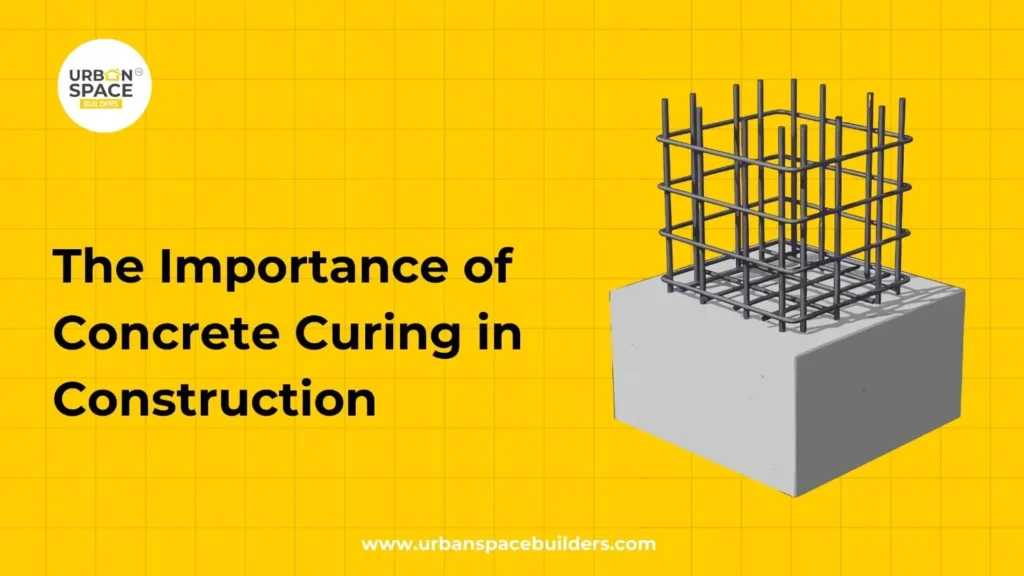
The Importance of Concrete Curing in Construction
Concrete forms the foundation of all modern construction. A structure’s strength, durability, and overall performance depend on how well the concrete is cured after placement. Many believe concrete hardens and reaches strength automatically, but in reality, curing concrete is a key step that ensures its long-term quality and safety. Urbanspace Builders follows strict curing standards to ensure that every building we construct remains strong, secure, and reliable for decades.
What is Curing in Construction
Curing in construction is the controlled process of maintaining proper moisture and temperature in freshly placed concrete. This allows hydration to continue for a long enough period. Hydration is the chemical reaction between cement and water that helps concrete gain strength and achieve a dense, solid structure.
If moisture evaporates quickly, the hydration process stops, resulting in concrete not curing properly and causing weak and damaged structures. To learn more about proper construction planning, check our detailed guide on building plan approval in Chennai.
Why Curing of Concrete is Important
Proper curing of concrete provides multiple benefits that directly impact structural quality:
- Achieves the required strength
When concrete is kept moist and protected, it continues gaining strength as designed. Poor curing limits the concrete’s ability to carry loads. - Prevents cracks and shrinkage
Without curing, water escapes rapidly due to heat and wind. This causes shrinkage cracks, especially in exposed slabs and wall curing. - Increases durability
Cured concrete becomes denser and more resistant to water seepage, chemical attack, and weather damage. This significantly improves building life. - Enhances surface finish
Concrete that remains moist during early stages develops a harder and smoother surface, helping avoid powdering, scaling, and surface roughness. - Reduces maintenance
Well-cured concrete performs better throughout its life and requires fewer repairs, reducing overall maintenance cost for property owners.
How Long Should Concrete Be Cured?
Concrete starts gaining strength from day one, but the first few days are most important. For normal construction works:
- At least 7 days of curing is required for standard concrete
- 10 to 14 days is preferred in hot climates like Chennai
- Up to 28 days is recommended for maximum durability
Even if a slab or column looks hard on the outside, curing must continue to strengthen the inner structure. To avoid long-term risks and unexpected expenses in construction, explore the hidden costs of buying a home in 2025.
Methods Used in Curing Concrete
Curing techniques are selected depending on the type of project, water availability, and weather conditions. Common methods include:
- Water curing by sprinkling, ponding, or damp cloth coverings
- Covering the surface with wet hessian or similar fabric to retain moisture
- Using curing compounds that form a membrane to prevent water loss
- Plastic sheet coverings to block wind and sunlight
- Steam or accelerated curing for precast elements that require early strength
- Sand or soil covering for ground-level slabs
Each method aims to stop evaporation and protect concrete during the early age. It is important that every element including walls, columns, and beams receives proper curing attention.
Problems Caused By Improper Curing
Concrete not curing or poorly cured concrete leads to several structural failures such as:
- Loss of compressive strength
- Development of hairline and shrinkage cracks
- Entry of moisture leading to seepage
- Higher permeability and corrosion of reinforcement
- Weak bonding between cement and aggregate
- Reduced durability and shorter building lifespan
- Frequent repairs and increased maintenance expenses
This shows why curing beton must always be taken seriously at every construction site.
Curing Concrete in Challenging Climates Like Chennai
High temperature and strong sunlight increase the rate of evaporation. Concrete can lose water before gaining adequate strength. That means curing must be started as early as possible and must be monitored continuously to ensure consistent moisture.
Urban Space Builders follows strict curing practices for all structural elements with effective water management and regular quality checks to avoid drying and cracking.
Concrete Cured Means Structure Secured
Fully cured concrete forms a strong and reliable structure. For residential homes, commercial buildings, and infrastructure projects, proper curing is essential for safety and longevity. Investing time and attention in curing ensures customers receive durable constructions that stay strong for years.
Final Thoughts
The importance of curing of concrete is often underestimated but it is one of the most crucial parts of construction. Good curing strengthens the structure. Poor curing risks premature aging and failures.
Urban Space Builders ensures that every project undergoes a well-planned curing process. This commitment ensures high performance, durability, and customer satisfaction in every structure we build. To help homeowners plan efficiently, our Home Construction Cost Calculator provides accurate pricing estimates before construction begins.
Frequently Asked Questions
- What is curing in concrete construction?
Curing in construction is the process of maintaining proper moisture and temperature in freshly placed concrete to ensure complete hydration and achieve full strength.
- Why is curing of concrete important?
Curing prevents cracks, increases durability, improves surface finish, and ensures the concrete develops the required structural strength for safe construction.
- How long should concrete be cured?
Concrete should be cured for a minimum of 7 days and up to 14 days in hot climates. Extending curing up to 28 days ensures maximum strength and durability.
- What happens if concrete is not cured properly?
Improper curing can lead to reduced strength, cracks, water seepage, corrosion of reinforcement, and increased maintenance or repair costs in the future.
- What are the common methods of curing concrete?
Common methods include water curing through sprinkling or ponding, wet coverings, membrane curing compounds, plastic sheets, and steam curing for precast structures.
Recent Posts
Uses of Silt Soil in Construction: A Practical Guide for …
Let's Build Your Dream Home Now!
Uses of Silt Soil in Construction: A Practical Guide for Chennai Homeowners and Builders When you start planning a home or commercial …